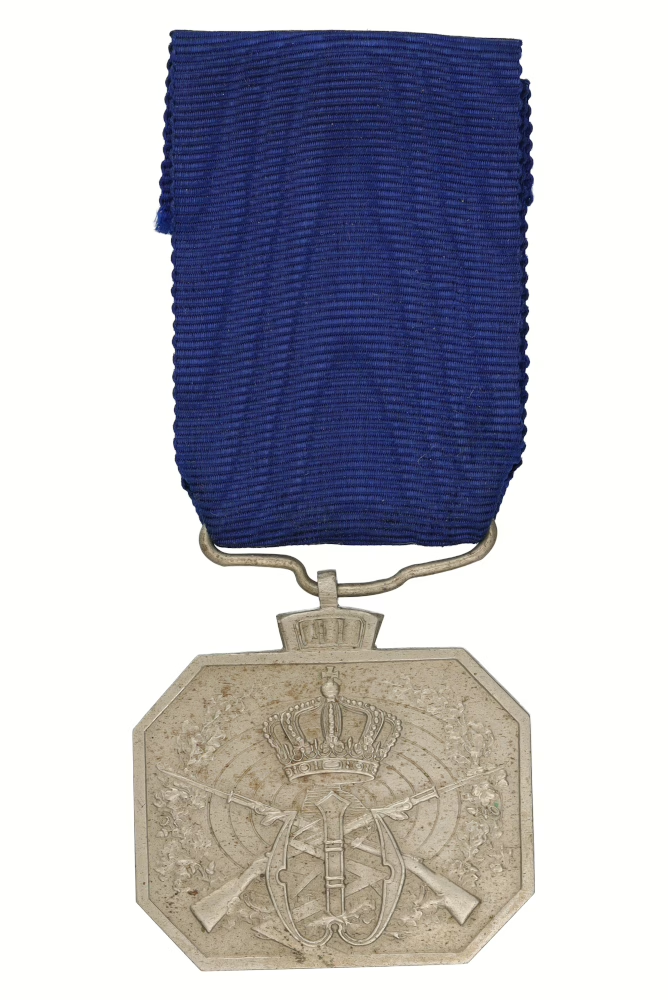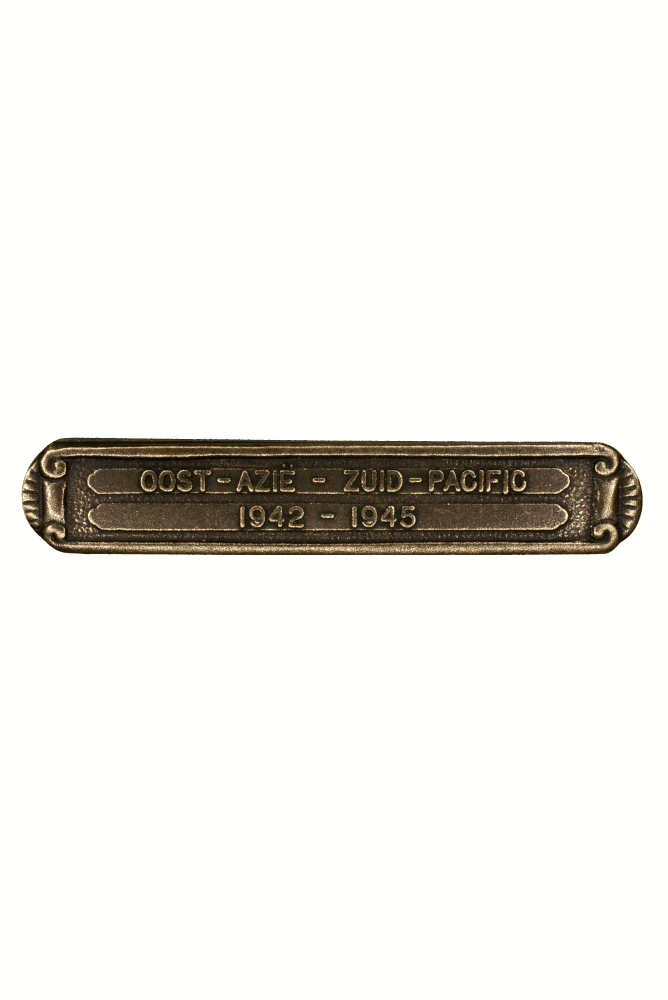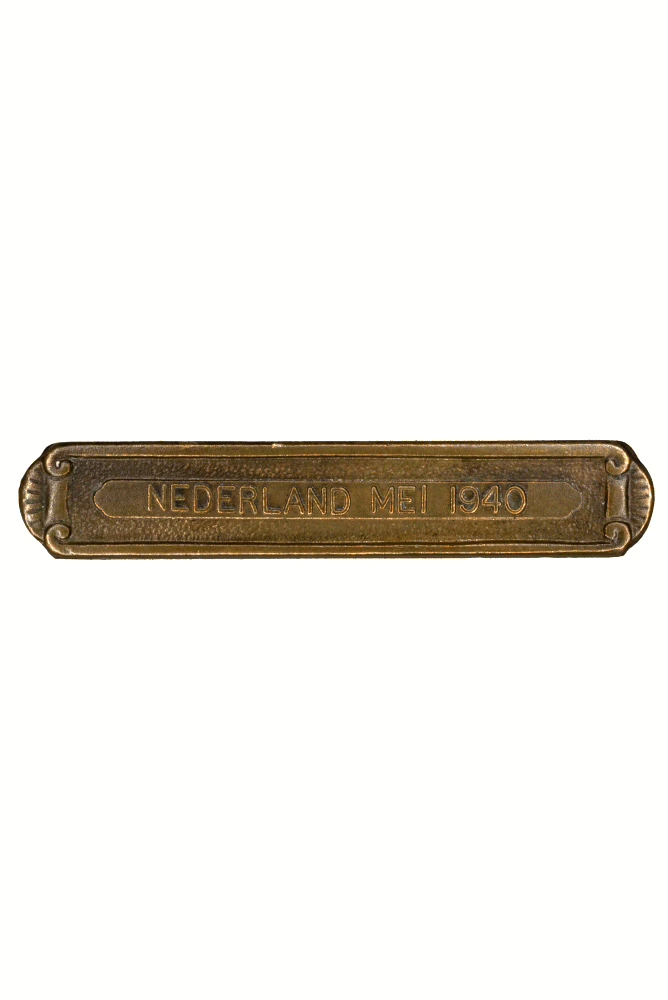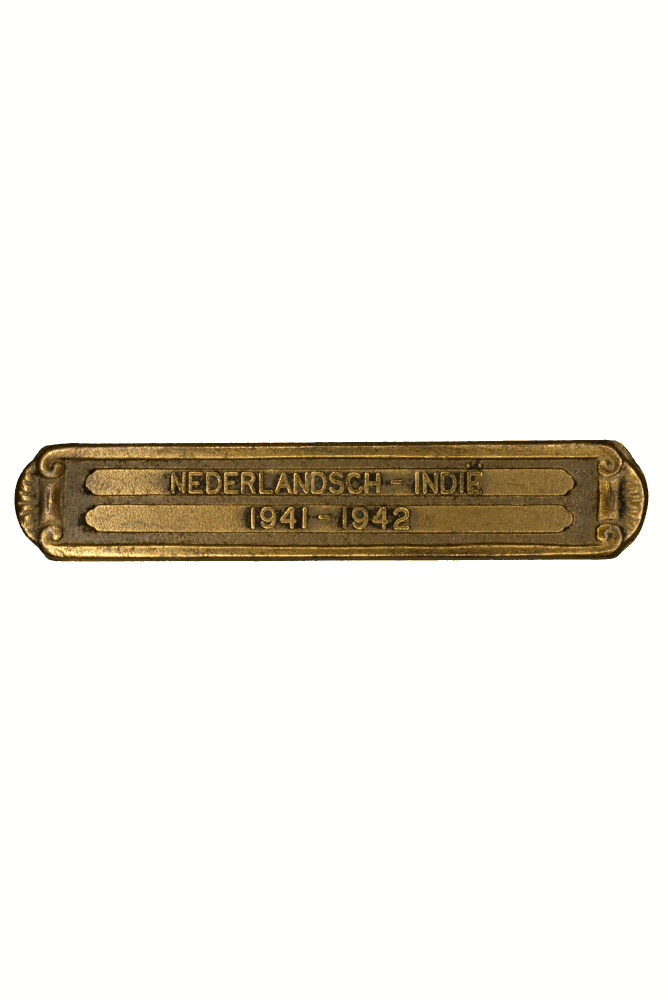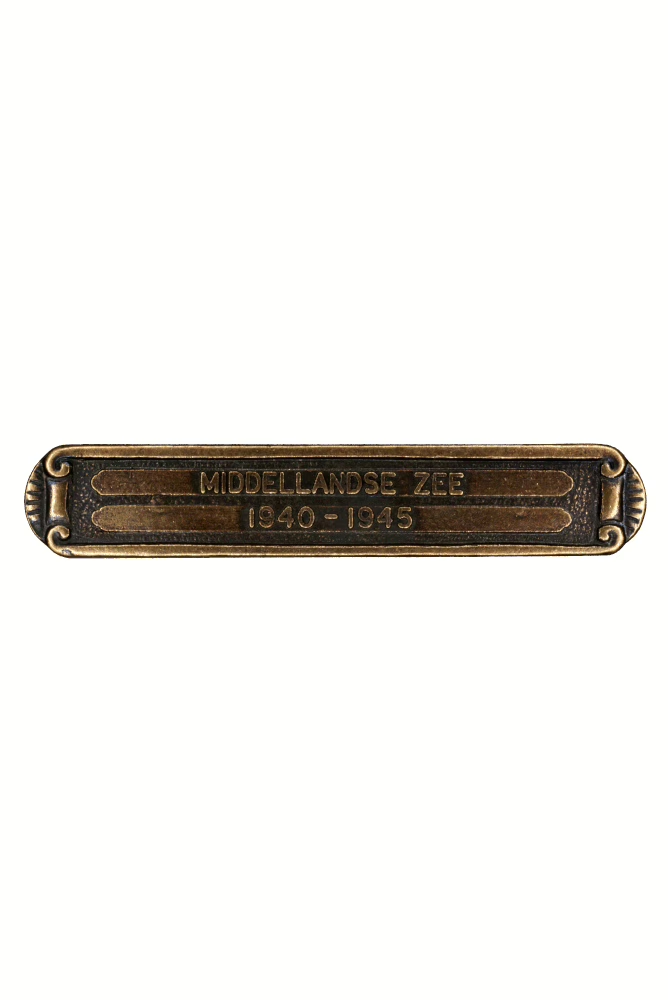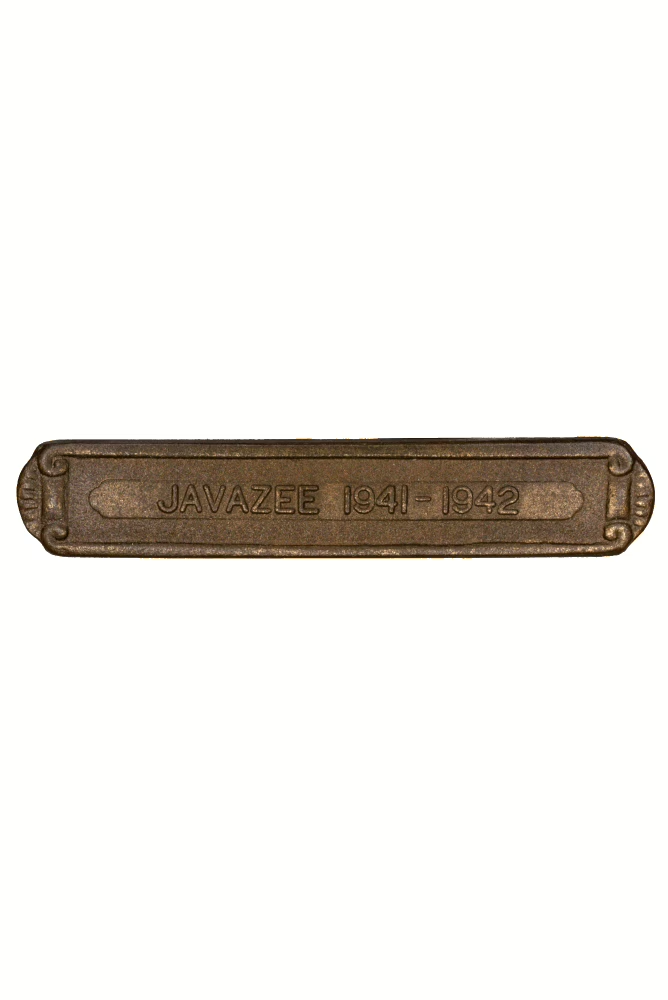
War Memorial Cross, JAVA SEA clasp 1941–1942
The War Memorial Cross was established as a reward for military personnel and civilians who have actually fought against the enemy and, in doing so, have demonstrated a conscientious fulfilment of their duties and good conduct in every respect.
General
| Start date | 1944 |
|---|---|
| End date | |
| Captions | voorzijde: VOOR KRIJGSVERRICHTINGEN; gesp: JAVA-ZEE 1941-1942 |
| Dimensions [width] | 40 mm |
| Material | bronze |
| Number |
Background
| Institutional decision | Royal Decree, 16 March 1944, No. 6 (Bulletin of Acts and Decrees No. E 16) |
|---|---|
| Additions | Royal Decree, 10 June 1947; Royal Decree, 6 January 1948 (Bulletin of Acts and Decrees No. I 6) |
| Objective | Established as a reward for military personnel and civilians who, from 10 May 1940 onwards, actually fought against the enemy for at least six months and, in doing so, demonstrated a sound sense of duty and good conduct in every respect. |
| (Historical) context | |
| Producer | Koninklijke Begeer; Frans Smits |
| Bibliography | Orders and Decorations of the Netherlands, 92–96 |
| Note | The Java Sea 1941–1942 bar is a bar awarded for special military operations. Only one bar for general military operations and various bars for special military operations may be worn on the ribbon of the War Commemoration Cross at any one time. |
Section
| In full | War Memorial Cross |
|---|---|
| Share | |
| Additions | buckles |