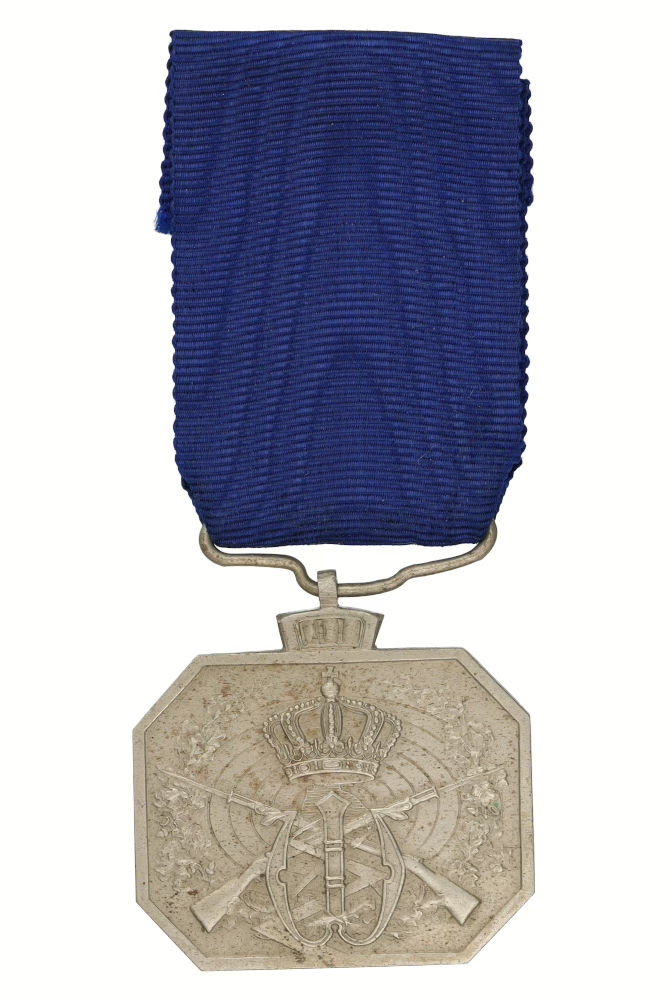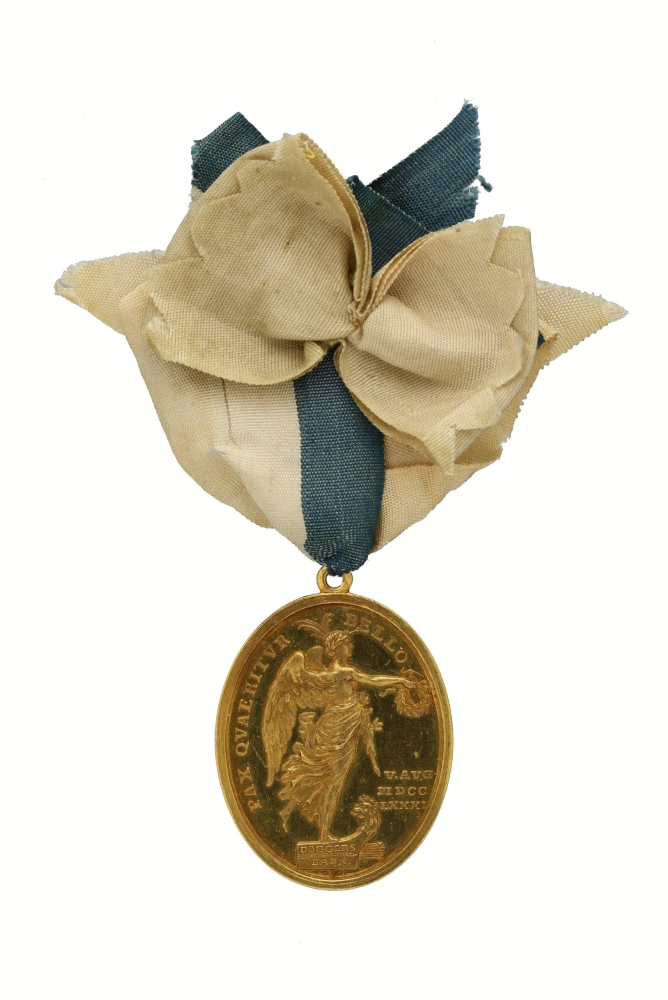
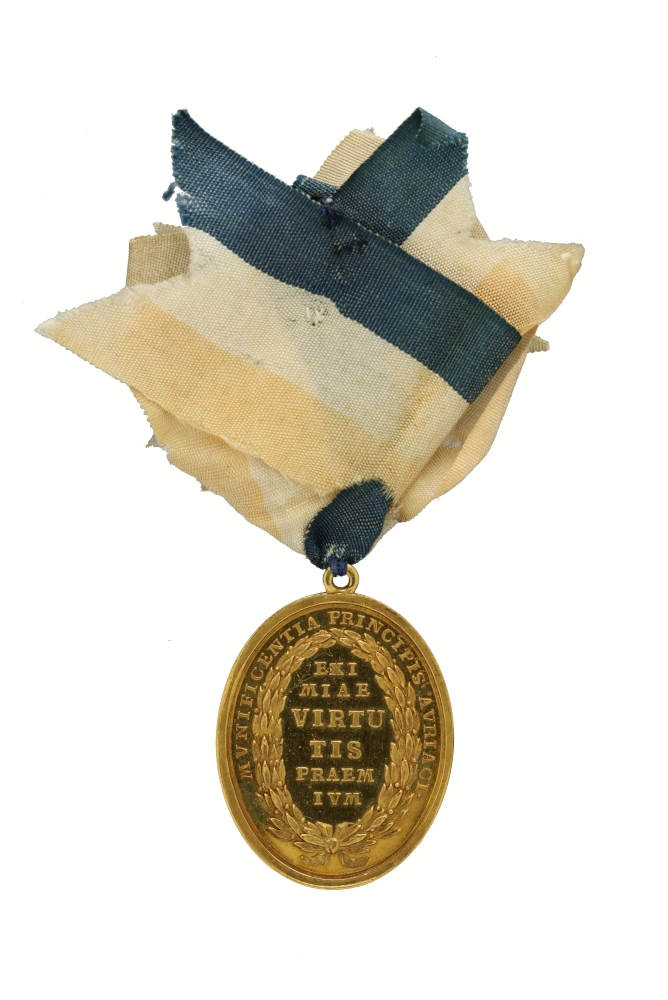


Dogger Bank Medal, gold
The Dogger Bank Medal was established in 1781 by Stadtholder William V as a reward for the senior officers of the fleet who had fought against the English in the naval battle at Dogger Bank.
The Doggersbank Medal was awarded in gold and silver. The gold versions were worn on a red, white and blue ribbon. The dies for the medal were engraved by Johan Heinrich Schepp. The medals were struck by Willem König & Son, the official medallist to the States General, on the ‘s Lands Medaillepers’ at the Kloosterkerk. Twenty-five gold examples were struck.
On 30 November 1781, the gold medals were presented by Stadtholder William V at the Stadtholder’s Court in The Hague.
General
| Start date | 1781 |
|---|---|
| End date | 1781 |
| Captions | voorzijde, omschrift: PAX QVAERETVR BELLO; opschrift, rechtsonder: V AVG MDCC LXXXI; opschrift, middenonder: DOGGERS BANK; keerzijde, opschrift: EXIMIAE VIRTUTIS PRAEMIVM; omschrift: MUNIFICENTIA PRINCIPIS AVRIACI |
| Dimensions [width] | 28 mm |
| Material | gold |
| Number | 25 |
Background
| Institutional decision | |
|---|---|
| Additions | |
| Objective | Awarded by Stadtholder William V as a reward to the senior officers of the fleet who fought against the English at the Battle of Dogger Bank. |
| (Historical) context | On 5 August 1781, an English and a Dutch fleet clashed off Dogger Bank. Although the battle produced no clear winner, it was celebrated as a great victory in the Republic. As Admiral-General of the Union, Stadtholder William V rewarded the heroes of Dogger Bank generously. |
| Producer | Willem König & Son; Johan Heinrich Schepp |
| Bibliography | Orders and Decorations of the Netherlands, 44 |
| Note | The Dogger Bank Medal was awarded in gold and silver. The gold medals were worn on a red, white and blue ribbon. |
Section
| In full | |
|---|---|
| Share | |
| Additions |