Main category
Order of the Golden Lion of Nassau
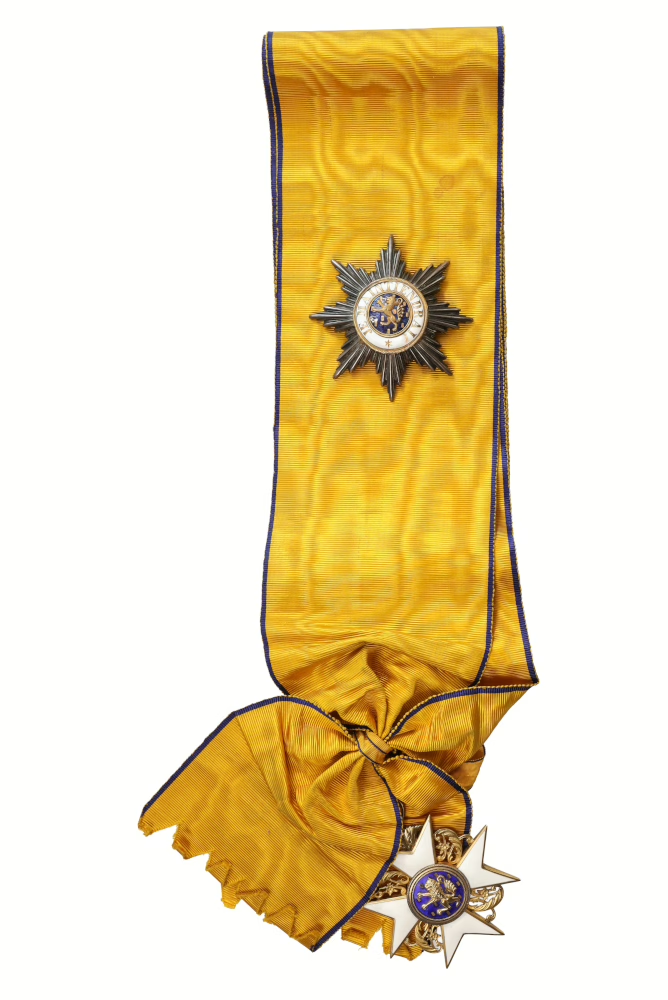
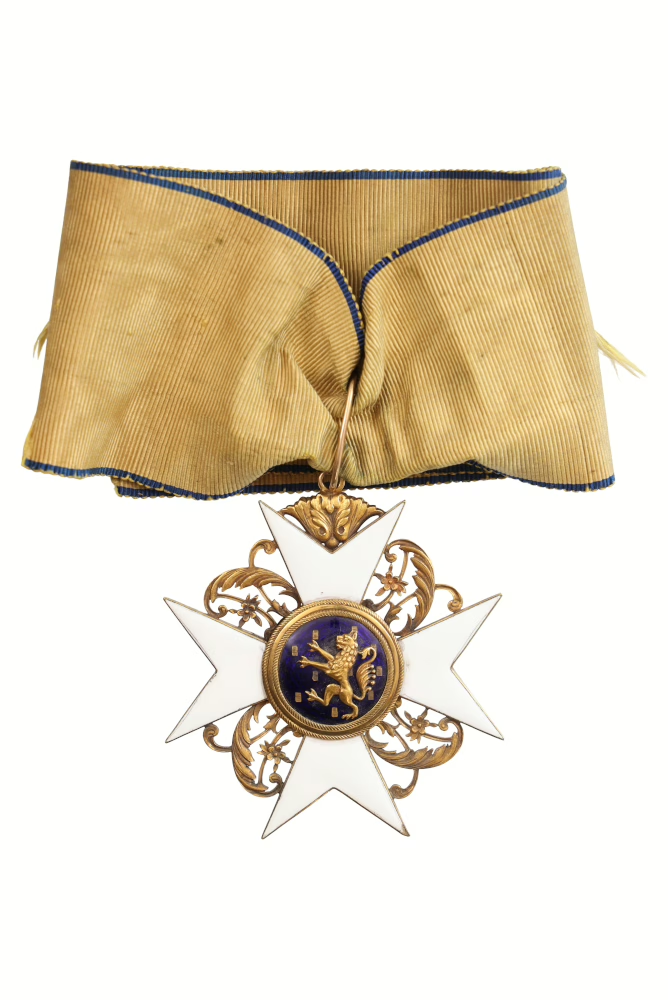
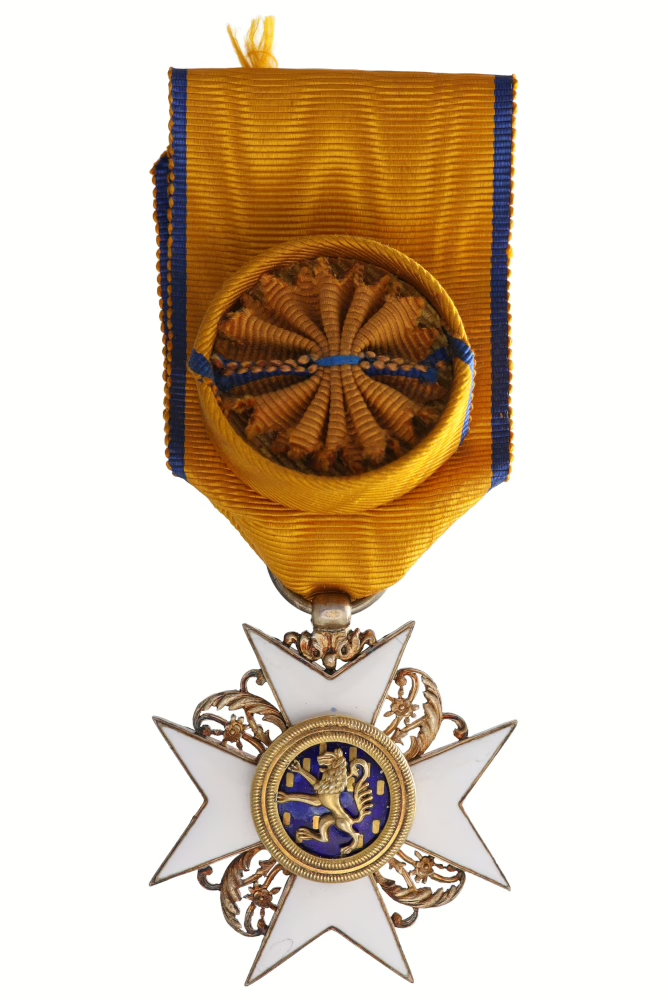
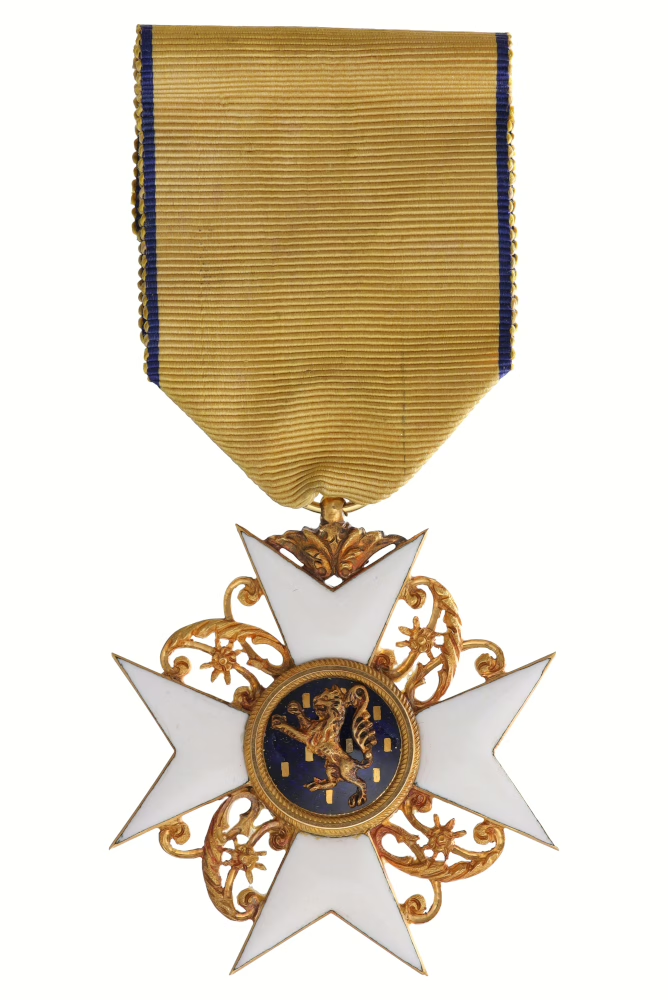
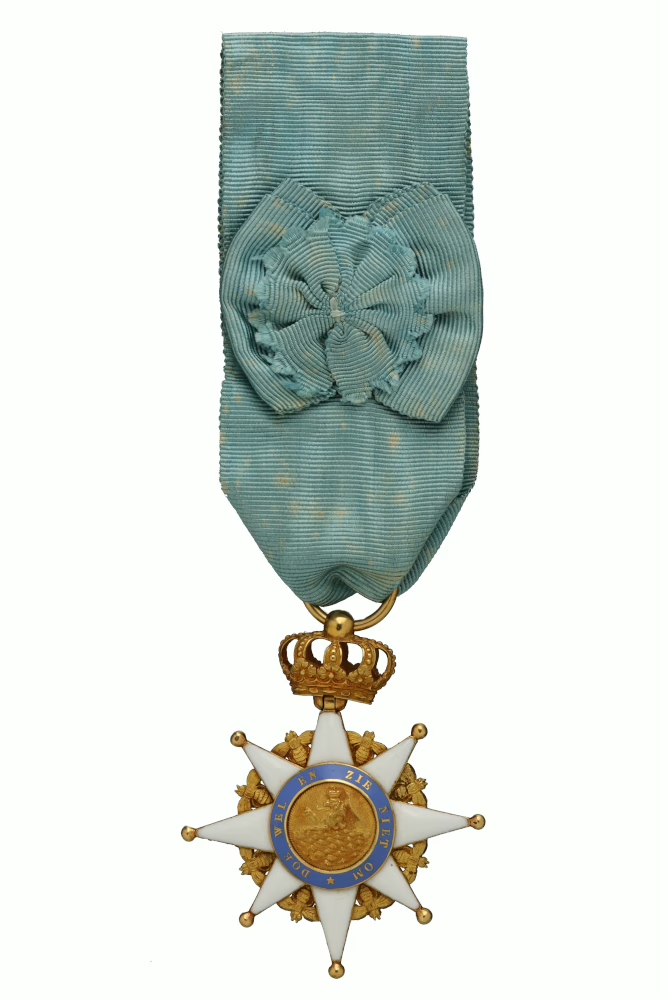
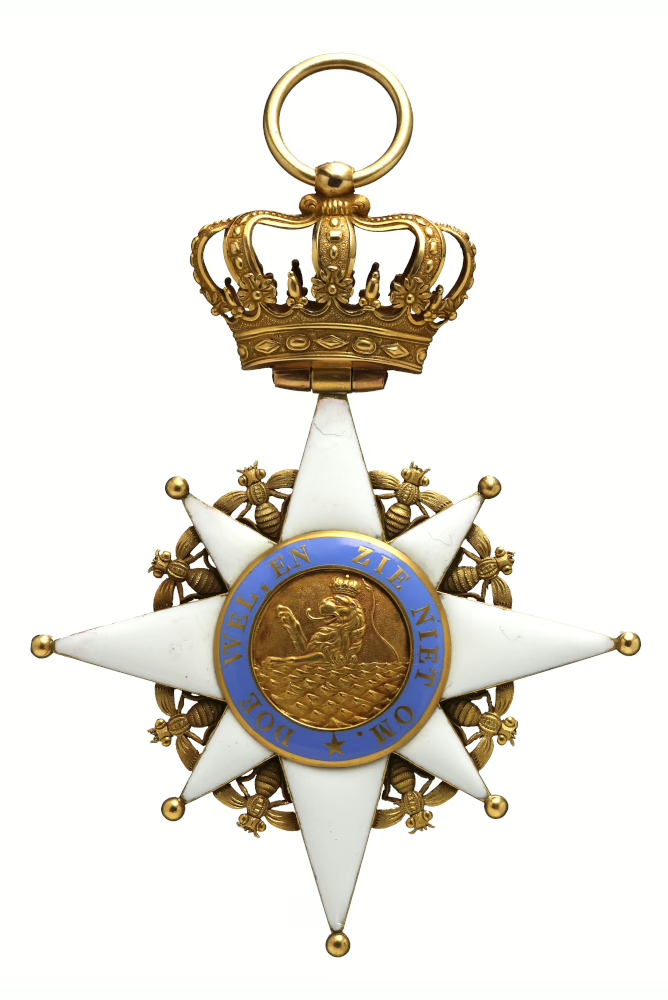
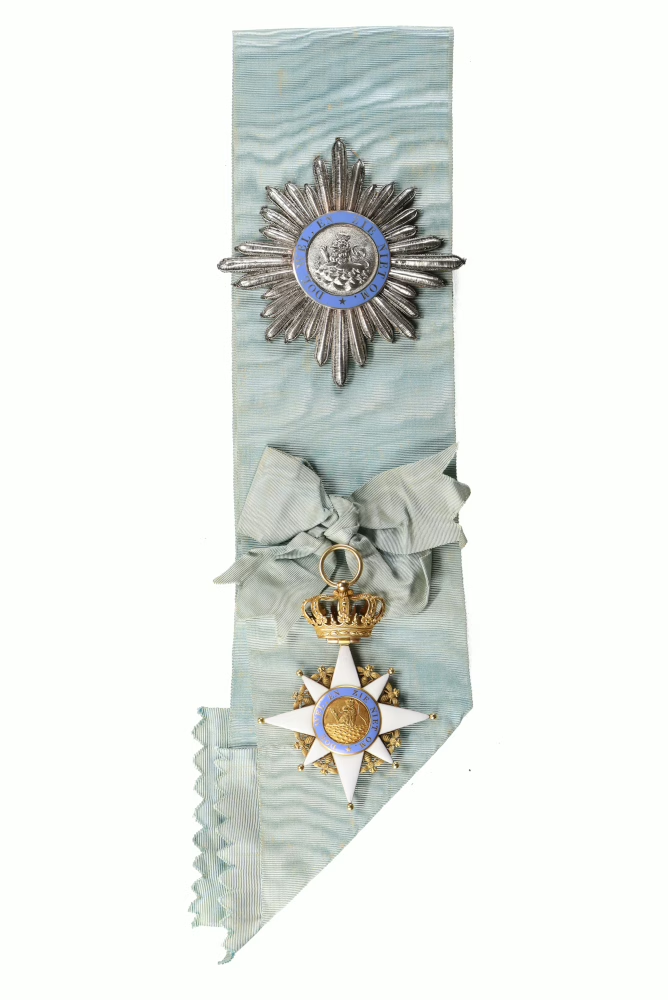
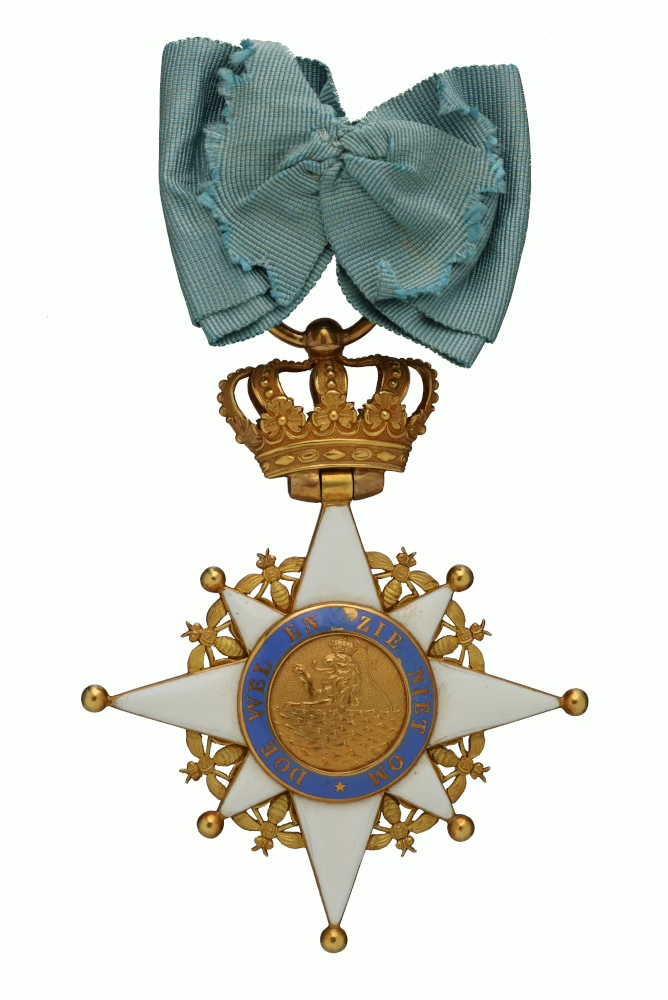
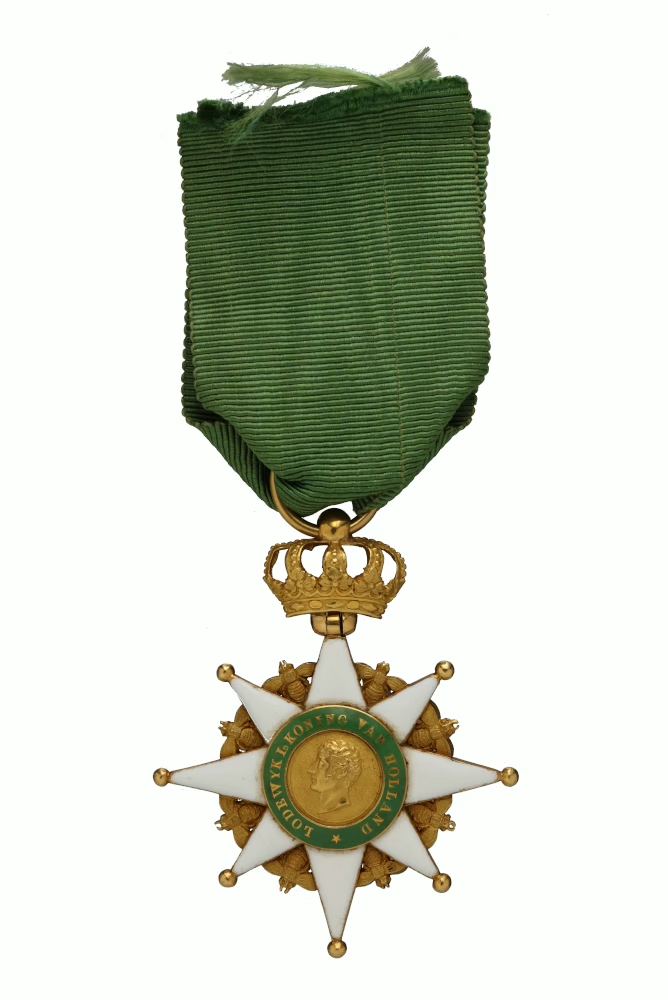
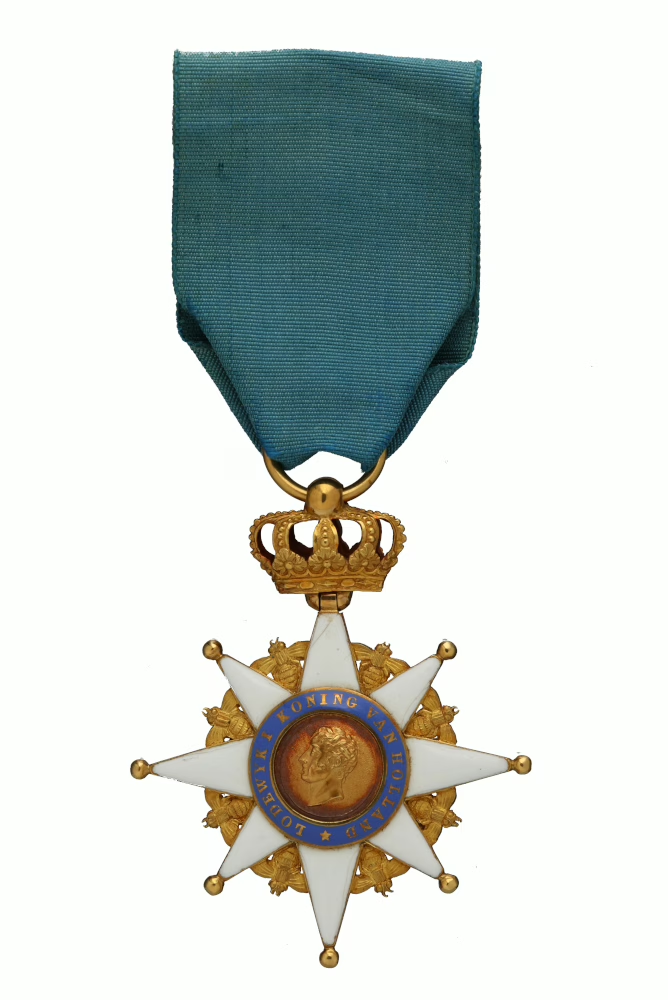
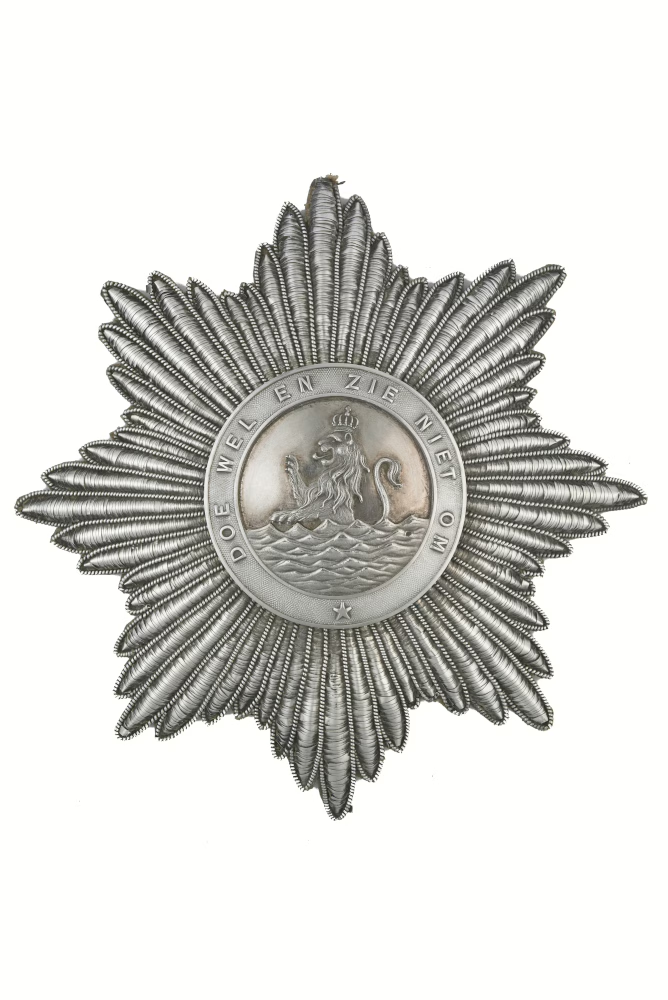
The Order of the Golden Lion of Nassau is a joint order of the two branches of the House of Nassau, awarded to monarchs, heads of state and distinguished persons. It was established by Grand Ducal Decree on 31 March 1858.
In 1873, King William III added three classes to the order: Knights of the 2nd, 3rd and 4th classes. A second major change followed in 1882: a new rank of Knight 3rd Class was created, with the former Knights 3rd and 4th Class now designated as Knight 4th Class and Knight 5th Class respectively. Crossed swords were also added to the insignia of Knights of the 1st and 2nd classes when these were awarded to military personnel. Following the death of William III in 1890, all the classes established in 1873 and 1882 were abolished by his successor, the Grand Duke of Luxembourg, formerly the Duke of Nassau.
On 20 May 1905, Grand Duke Adolph and Queen Wilhelmina concluded a family treaty, whereby the Order of the Golden Lion of Nassau was re-established as a joint order with a single class, that of Knight 1st Class.
The Order of the Golden Lion of Nassau is still awarded and is listed in the decree on the order of precedence for honours, issued by the Minister of the Interior.
General
| Start date | 1858 |
|---|---|
| End date | |
| Captions | voorzijde, tussen kruisarmen: N; keerzijde: JE MAINTIENDRAI |
| Dimensions [width] | |
| Material | gold; enamel |
| Number |
Background
| Institutional decision | Grand Ducal Decree, 31 March 1858 |
|---|---|
| Additions | Grand Ducal Decree, 13 March 1873; Grand Ducal Decree, 22 March 1882; family treaty, 20 May 1905 |
| Objective | Established as a joint order of the two branches of the House of Nassau, conferred upon monarchs, heads of state and high-ranking individuals. |
| (Historical) context | |
| Producer | |
| Bibliography | Orders and Decorations of the Netherlands, 32–33 |
| Note | The Order of the Golden Lion of Nassau was established in 1858 by the heads of the two branches of the House of Nassau, namely William III, King of the Netherlands and Grand Duke of Luxembourg, and Adolph, Duke of Nassau. The order symbolises the unity and solidarity of the two branches of the House of Nassau. Both sovereigns were able to confer the order jointly or individually. In 1866, the Duchy of Nassau was annexed by Prussia. Thereafter, William III no longer felt obliged to consult Adolph regarding the changes he made to the structure of the order. In 1873, he decided to add three classes to the order: Knight 2nd, 3rd and 4th Class. A second major change followed in 1882: a new rank of Knight, 3rd Class, was created, with the former Knights of the 3rd and 4th Classes now designated as Knights of the 4th Class and Knights of the 5th Class respectively. Crossed swords were also added to the insignia of Knights of the 1st and 2nd classes when these were awarded to military personnel. King William III died in 1890. In Luxembourg, he was succeeded by the former Duke of Nassau, Adolph. In 1892, he reversed the changes introduced by William III. On 20 May 1905, Grand Duke Adolph and Queen Wilhelmina concluded a family treaty, whereby the House Order of the Golden Lion of Nassau was restored as a joint House Order with a single rank, Knight 1st Class. |
Related honours