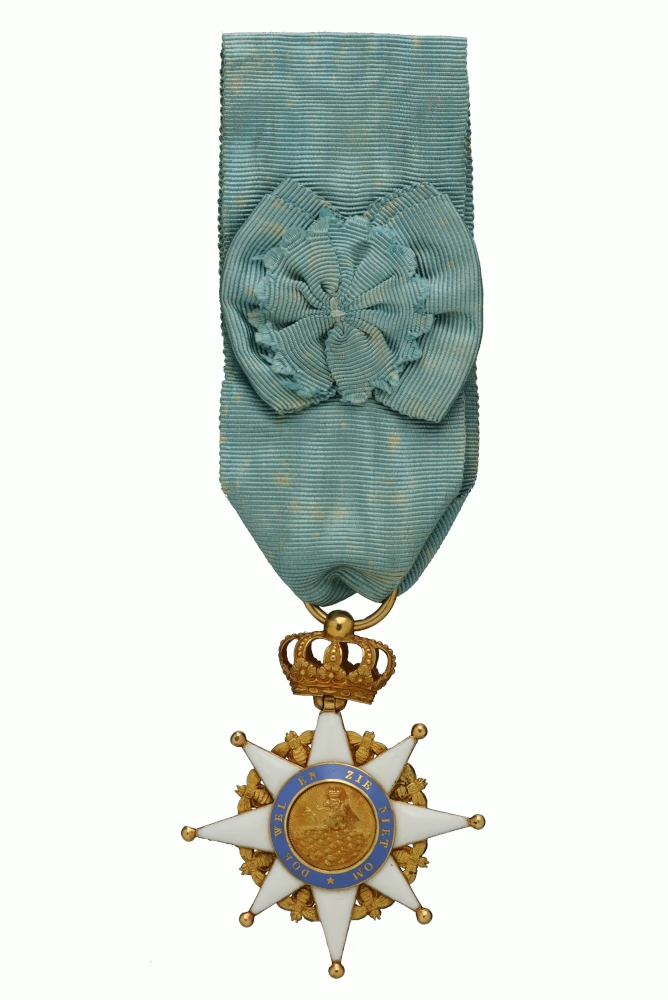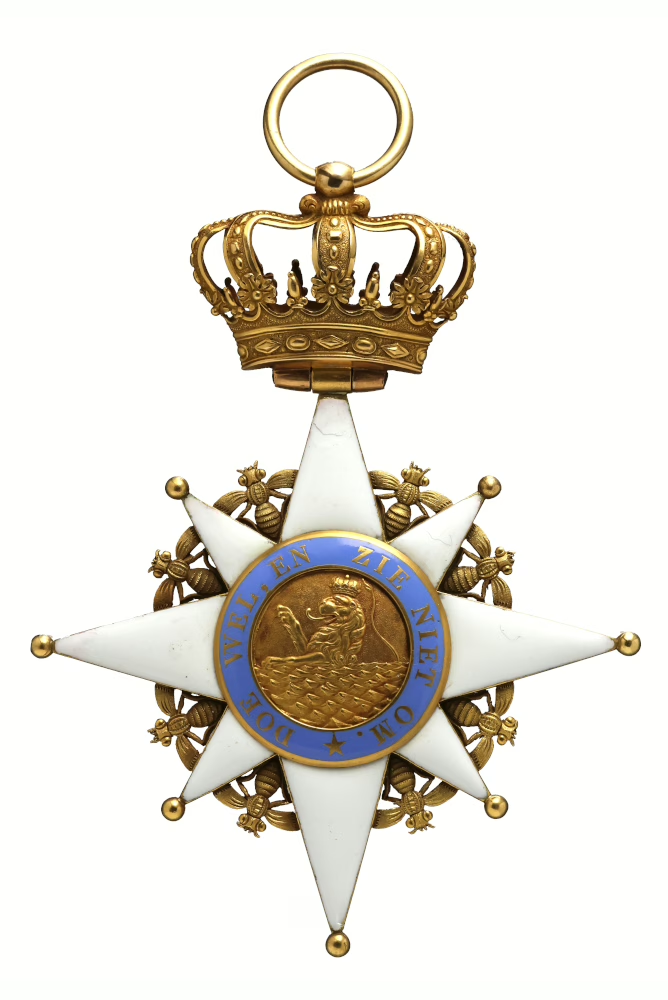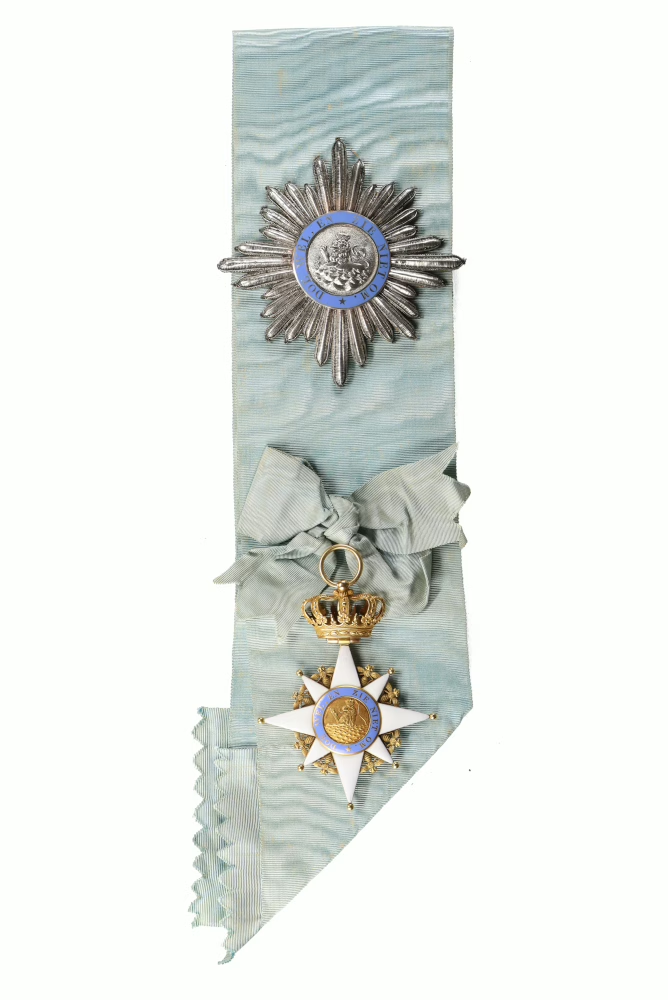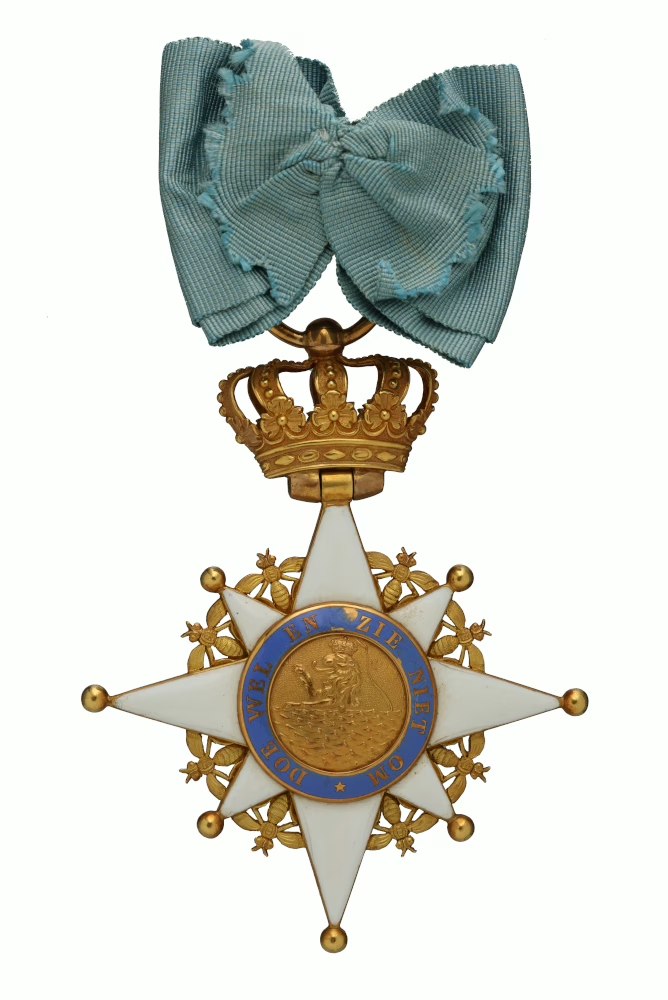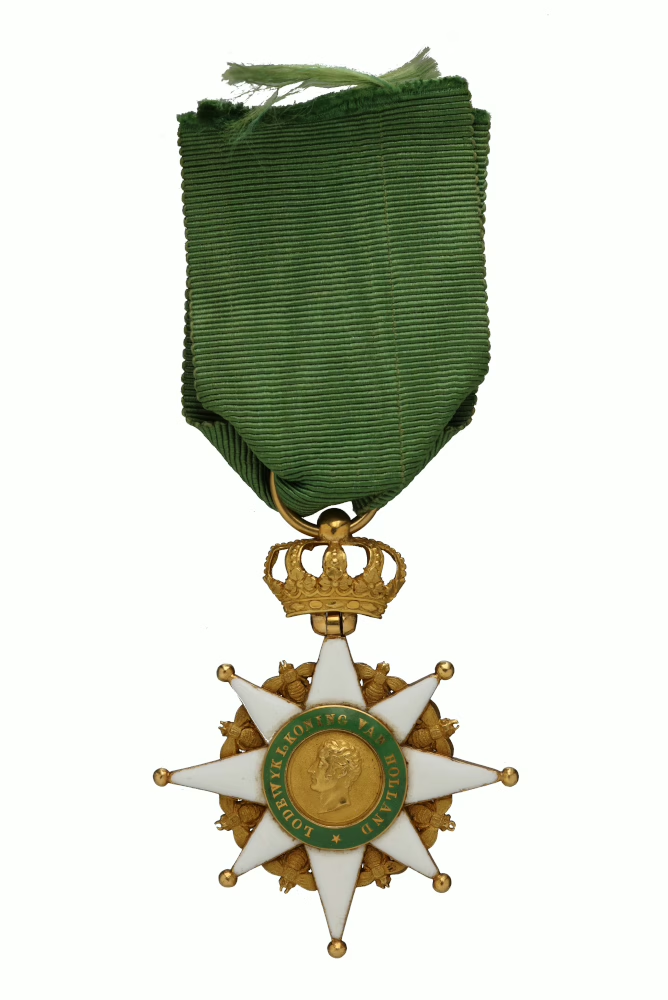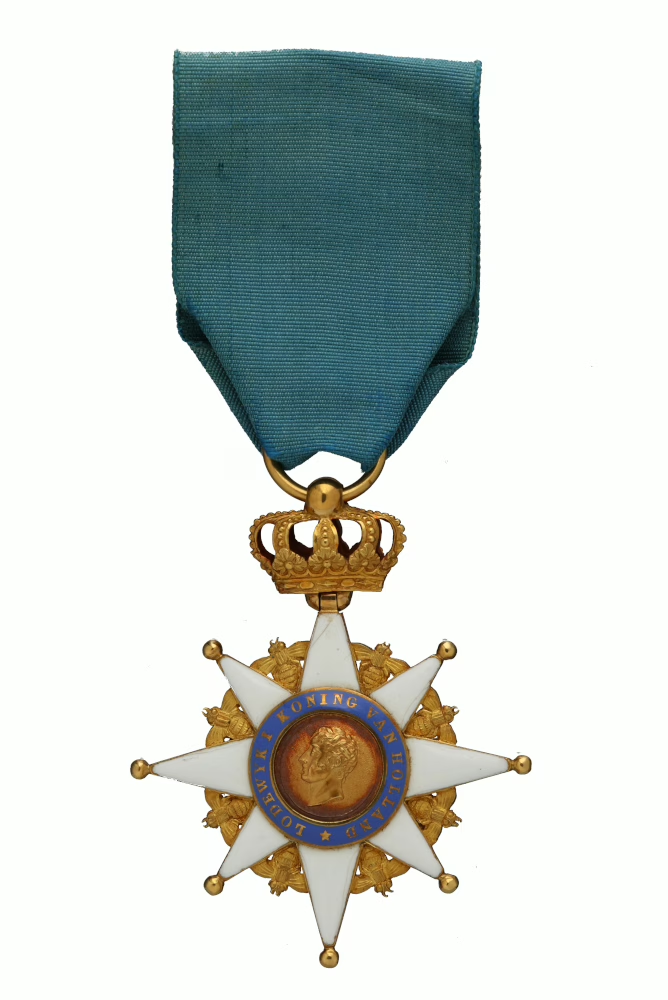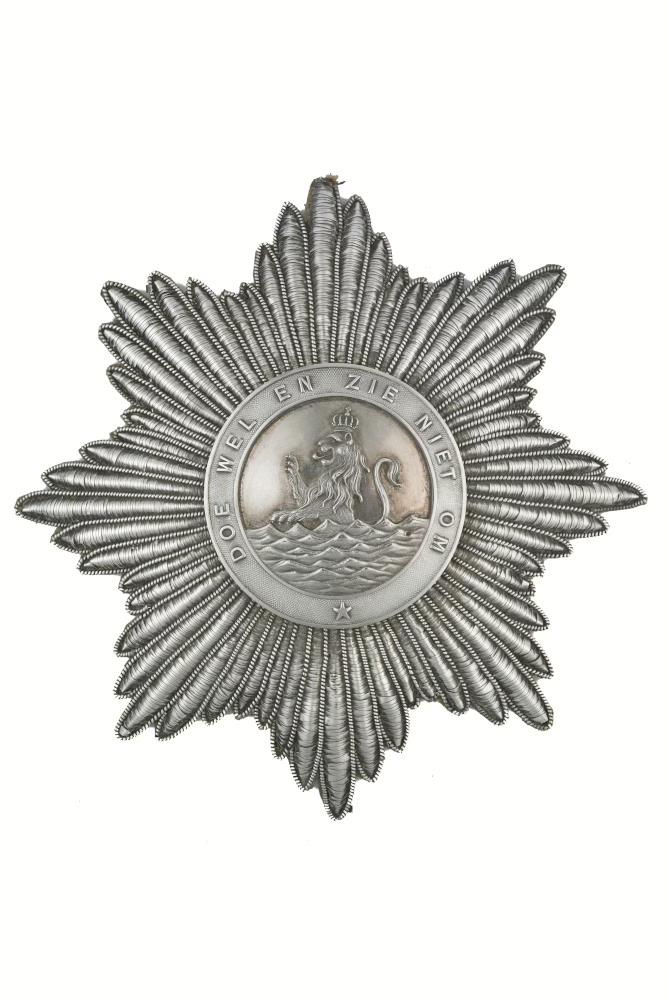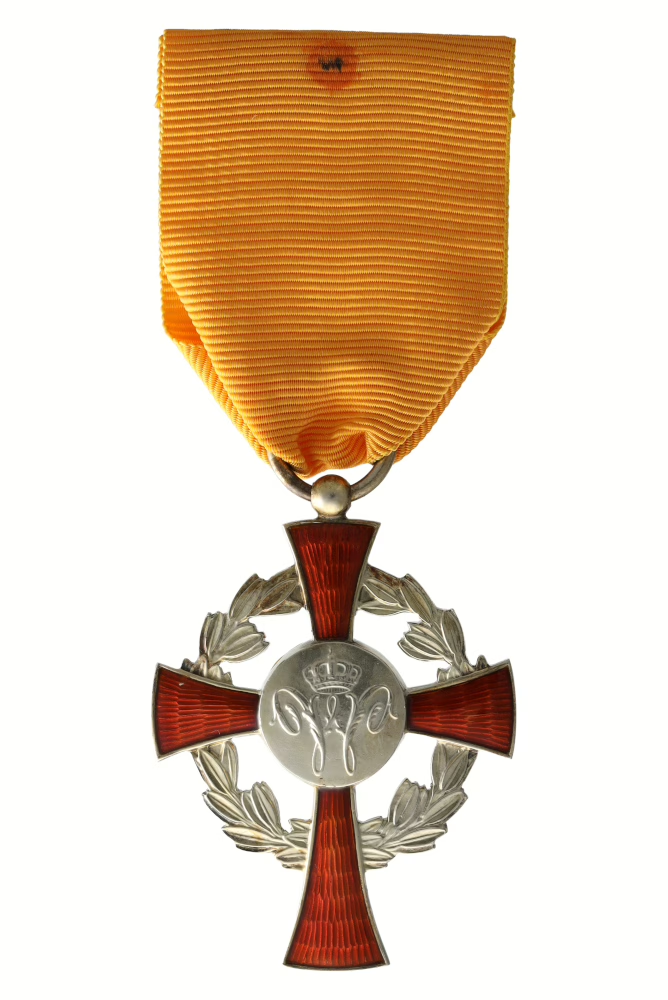
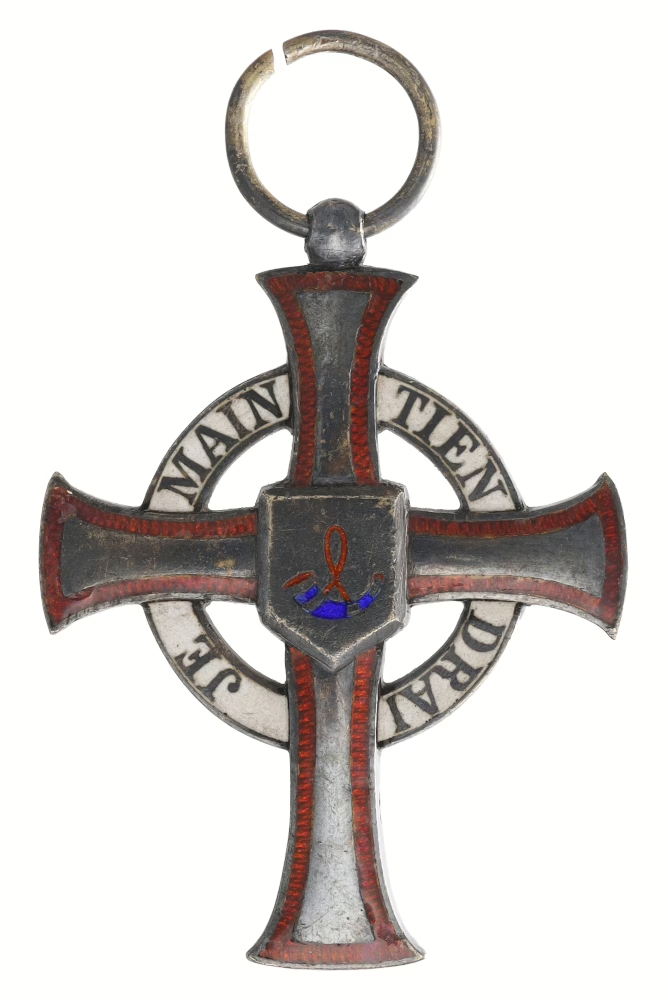
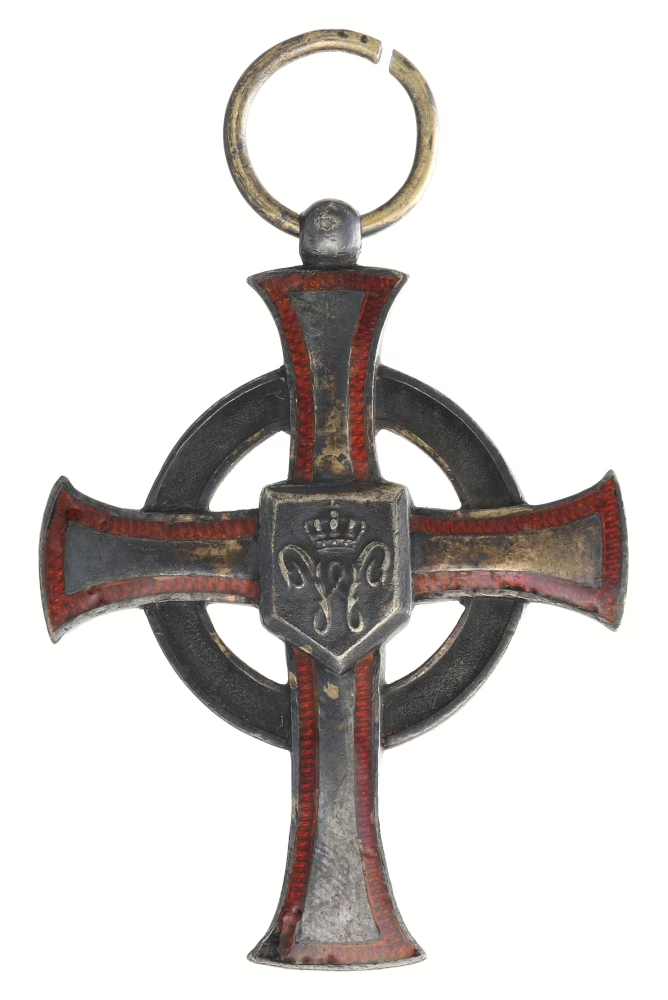
Order of Orange, Knight
The Order of Orange was established in 1905 to honour those who have rendered distinguished service to the King or Queen and His or Her House. In 1908, the rank of Knight was divided into Knight 1st Class and Knight 2nd Class, with the Knight 1st Class wearing a gold-plated silver decoration and the Knight 2nd Class wearing a silver decoration. The rank of Knight has not existed since 1969.
General
| Start date | 1905 |
|---|---|
| End date | 1969 |
| Captions | voorzijde: VN; keerzijde: JE MAINTIENDRAI |
| Dimensions [width] | 37 mm |
| Material | gilt silver; enamel |
| Number |
Background
| Institutional decision | Royal Decree, 19 March 1905 |
|---|---|
| Additions | Royal Decree, 14 November 1908; Royal Decree, 30 November 1969 |
| Objective | Established to honour those who have rendered distinguished service to the King or Queen and His or Her House |
| (Historical) context | |
| Producer | Auguste Witte; Koninkljke Begeer |
| Bibliography | Orders and Decorations of the Netherlands, 118–119; For Us and Our House. More than a hundred years of the House Order of Orange 1905–2005 (2011) |
| Note | In 1908, the rank of Knight was divided into Knight 1st Class and Knight 2nd Class, with the Knight 1st Class wearing a gold-plated silver decoration and the Knight 2nd Class wearing a silver decoration. |
Section
| In full | House Rules of Orange |
|---|---|
| Share | |
| Additions | none |