


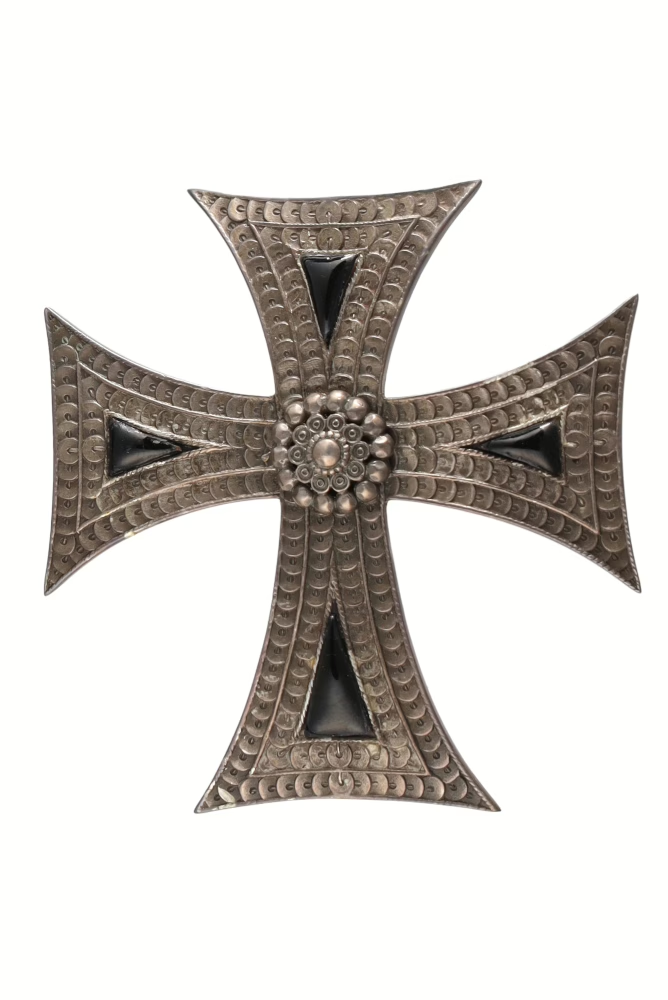

Teutonic Order, Brandenburg Bailiwick
The Order’s insignia is intended to be worn by members of the Order.
Noble candidates are regarded as prospective members of the Order, without the right to be admitted to the Order in due course. A noble candidate of full age, of impeccable character and a member of a Protestant Christian denomination, may, with the permission of the Chapter of the Order and following the Monarch’s approval, be admitted to the Order as a knight-candidate. The members of the Chapter are elected from among the knight-candidates. The Chapter consists of a Land Commander (Head of the Order), a Coadjutor (Deputy Head), ten Commanders (each with a Commandery under their authority) and one or two Chapter Knights. The Chapter is supported by a secretary and a treasurer-general.
General
| Start date | 1637 |
|---|---|
| End date | |
| Captions | |
| Dimensions [width] | |
| Material | |
| Number |
Background
Noble candidates are regarded as prospective members of the Order, without the right to be admitted to the Order in due course. A noble candidate of full age, of impeccable character and a member of a Protestant Christian denomination, may, with the permission of the Chapter of the Order and following the Monarch’s approval, be admitted to the Order as a knight-candidate. The members of the Chapter are elected from among the knight-candidates. The Chapter consists of a Land Commander (Head of the Order), a Coadjutor (Deputy Head), ten Commanders (each with a Commandery under their authority) and one or two Chapter Knights. The Chapter is supported by a secretary and a treasurer-general.
| Institutional decision | |
|---|---|
| Additions | |
| Objective | |
| (Historical) context | This order traces its origins to the knights who occupied the Prussian and Baltic states in the 14th and 15th centuries. In 1525, as a result of the Reformation, the Order split into two branches: a Catholic and a Protestant one. The Catholic branch now exists only in Austria, whilst the Protestant branch survives solely in the Knightly German Order, Bailiwick of Utrecht, founded in the Netherlands in 1637. The other bailiwicks and commanderies were abolished or suppressed by Emperor Napoleon. The Bailiwick of Utrecht was also abolished by Napoleon in 1810, but was revived in 1815 by King William I. However, for political reasons, the King did not accept the title of Grand Master, as this might have offended the Austrian Emperor, who was Grand Master of the much older Catholic branch. He did, however, place the Order under his protection, and to this day appointments to the Order are confirmed by Royal Decree. |
| Producer | |
| Bibliography | Orders and Decorations of the Netherlands, 38 |
| Note |
Section
| In full | |
|---|---|
| Share | |
| Additions |


