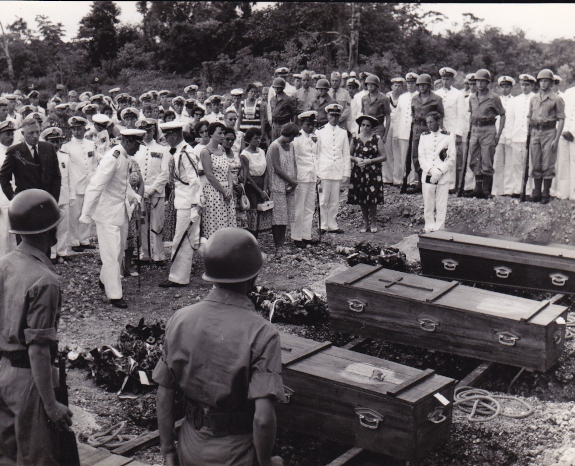
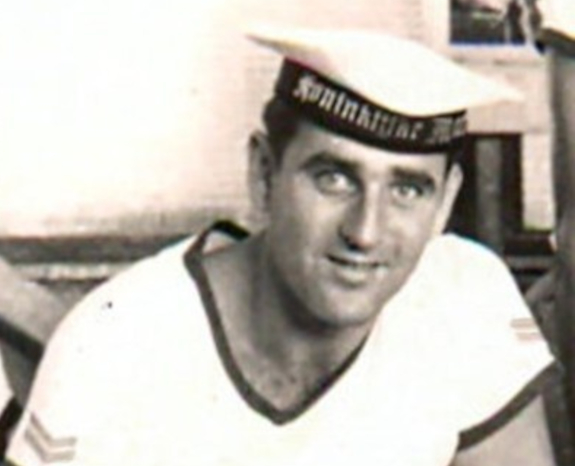
Just one more training flight. As was so often the case, Rinus van de Wiel boarded a Navy Aviation Service Dakota that evening for a flight over the coast of Dutch New Guinea. No one could have imagined that, just a few minutes later, a burning parachute flare would claim the lives of five young soldiers.
His story is set in New Guinea, thousands of kilometres from the Netherlands, where tensions were mounting ever further in the early 1960s.
A tense battle in New Guinea
In the early 1960s, Dutch New Guinea was under Dutch administration. Relations with Indonesia continued to deteriorate, whilst infiltrators were entering the area by sea to undermine the Dutch presence. The extensive coastline therefore had to be kept under constant surveillance.
The Naval Air Service played a key role in this. Reconnaissance flights were carried out day and night to detect suspicious activity along the coast. Parachute flares were used, particularly during night-time missions, to temporarily illuminate the coastline, enabling the crew to monitor the area from the air.
A mission that ended in tragedy
Flight Attendant Rinus van de Wiel was a member of the crew of Dakota 079. Together with Captain Benno Smits, co-pilot Rein Mulder and flight engineers Gerrit Bontius and Frits Immers, he set off on 2 January 1961 for a night-time training flight.
The Dakotas were not designed for dropping parachute flares. As there was no special ejection system, the flares were thrown out by hand through the open side door. It was a precise task that required great concentration from the crew.
The first four flares were dropped without any problems. Things went wrong with the fifth one.
The flare had already ignited whilst still on board the aircraft. Although the crew managed to get the burning flare out of the aircraft, the parachute remained attached to it. Eyewitnesses saw a bright orange glow and a trail of smoke appear behind the Dakota. A few seconds later, the aircraft lost control and crashed into the sea, just off the coast of Biak.
Rinus van de Wiel was one of the three crew members who were found that very evening. He was just 28 years old. The other two crew members disappeared into the sea along with the wreck.
A sculpture as a lasting memento
A special sculpture, designed by the artist Ad Haring, was created for the family of Rinus van de Wiel. Without words, the artwork tells a story of camaraderie, loss and enduring memory.
At the front, four anonymous soldiers stand close together. They symbolise the solidarity of soldiers who carry out a single task together and must be able to rely on one another. Between them stands a single figure in a different colour. This gives that one soldier, in particular, a special place within the group.
Anyone walking round the sculpture will discover a second meaning. One soldier has broken away from the others and his shoulder is turned away from the flag. The shared mission gives way to silence and loss. The figures are deliberately faceless. As a result, they represent not only Rinus, but also all the soldiers who made the ultimate sacrifice whilst on duty.
The personalised engraving gives the sculpture a name. In this way, it is not only a work of art, but above all a tangible reminder of Rinus van de Wiel. His story symbolises the dedication of five young soldiers who carried out their mission on 2 January 1961 and never returned. The sculpture keeps their memory alive and shows that behind every name lies a person who must not be forgotten.