Wouter Hagemeijer
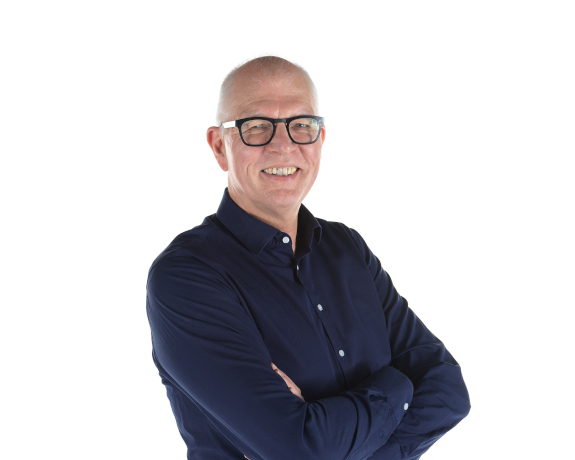
Behind the decoration
This month: Wouter Hagemeijer
If you’re posted to Lithuania for more than 30 days, you’ll receive three medals!!
Since when have you been actively involved with orders of chivalry and honours?
That was from around 2022 onwards. That was when I was asked to become an adviser/researcher for the Bravery Awards Committee (CDO-CLAS) and the Recognition Committee (CWCLAS) of the Royal Netherlands Army. I held this role until my retirement at the start of this year.
What is the reason or motivation behind your interest in orders of knighthood and honours?
I was asked to become an adviser/researcher. At that time, I had already been serving as secretary of the KL Tradition Committee (TCKL) for several years. In that role, too, I regularly dealt with commendations and proficiency badges that were permitted – or not permitted – to be worn on the uniform. I was also involved in drafting the applications for the Afghanistan Banner Inscription and the Dordrecht 1940 Banner Inscription for the Engineer Regiment. These are collective awards for bravery.
So they already knew me, and I was available. What’s more, I had experience of archival research, which came in handy here too. From that moment on, I really began to immerse myself in the wonderful world of honours and awards.
What is your area of interest?
I am particularly interested in the ratings that are awarded.
These days, the honours system has, in a sense, become overwhelming as a result of the many ‘campaign medals’ being awarded. For example, if you’re deployed to Lithuania for more than 30 days, you receive three medals: a Lithuanian one, a NATO medal and the International Missions Commemorative Medal. It all adds up very quickly that way. And many people think: the more decorations, the braver the person. Even within the Ministry of Defence. But those decorations only show where someone has been. Not what they actually did there.
The Awards Committee met around five times a year, discussing between two and four cases at each meeting. The situation was quite different for bravery awards, as a strict 10-year limitation period applies in those cases.
Occasionally, there are additional cases which were submitted on time but were left ‘on the back burner’, such as the Cross of Merit awarded last month and the Dordrecht 1940 Banner Inscription. The latter case related to the fighting in Dordrecht during the May days of 1940. This was carried out by soldiers who were part of the Dordrecht Pontoon and Torpedo Crew Depot. These were troops who were neither trained nor equipped for combat duties. In 1960, it was decided that they were entitled to a banner inscription … but they did not have a banner of their own. Since 1 January 1972, they have been part of the Engineer Regiment, which does have its own banner. In 2026, the long-standing promise was finally fulfilled.
Do you have any orders of knighthood or honours yourself?
I have the ‘usual’ military honours, such as the deployment medals for Bosnia and Afghanistan, the Long Service Award for 30 years’ service as an officer, the 1980 Inauguration Medal and the Cross for Marching Proficiency.
What is your favourite decoration and why?
To be honest, I don’t really have a favourite: I value the accolades and awards equally.
But if I had to name just one, it would be the Medal of Honour for Acts of Humanitarian Aid. It is a very prestigious award for bravery in civil society, an area that often receives too little attention. Often, someone who saves another person is awarded a municipal medal of honour. That is actually a shame.
And within the Royal Netherlands Army, the Life-Saving Action Badge has also recently been introduced. In the past, the red cord of honour was awarded for this, but that is intended as a visible token of appreciation for service personnel who excel in their work.
Which order of knighthood or honour would you yourself like to receive one day?
None. I don’t think a medal for bravery is on the cards, and I haven’t done enough extraordinary things to warrant one for an exceptional achievement. And that’s fine by me.
Who do you think deserves a royal honour?
I wouldn’t know.
Is there anything else you’d like to add, or anything that ought to be included in your story but is currently missing?
What struck me during the years I was working on this was the following:
There is a certain degree of subjectivity inherent in the whole system: it must begin with someone submitting an application (except in the case of the Military Order of William and the Combat Badge). So some people will regard an action or activity as ‘normal’, whilst others will consider it to be something quite extraordinary. And that judgement then determines whether or not the process for awarding a decoration or recognition is initiated.
It also emerges that military personnel sometimes realise, several years later, that they have done something exceptional which should still be recognised or honoured. Sometimes this is influenced by the fact that someone else has been honoured, whilst they feel they have done something comparable. And people often have opinions about the rules and criteria applied as well.
We try to draw up criteria that are as clear as possible for awarding honours or tokens of appreciation. And yet one has to conclude that, ultimately, they are never really very specific and always remain a matter of debate.
Which Dutch researcher, collector or stakeholder would you like to pass the baton to?
To Brigadier General (retired) Otto van Wiggen. Following his retirement, he and Johan van Houten re-examined all rejected applications for bravery awards relating to Afghanistan. This resulted in a number of bravery awards being granted after all.
Partnerships and stakeholders