


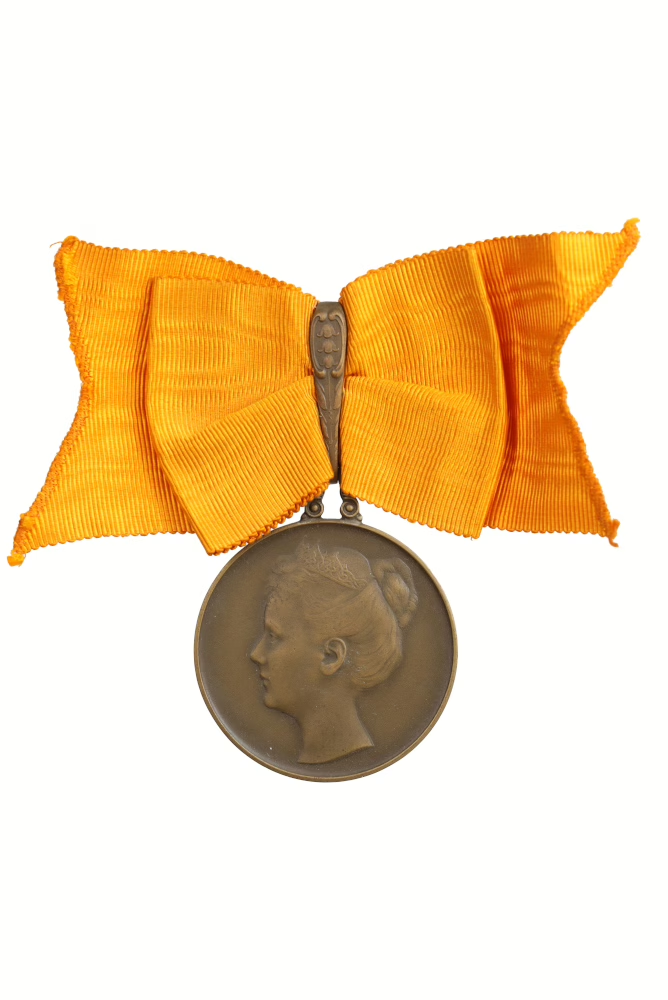
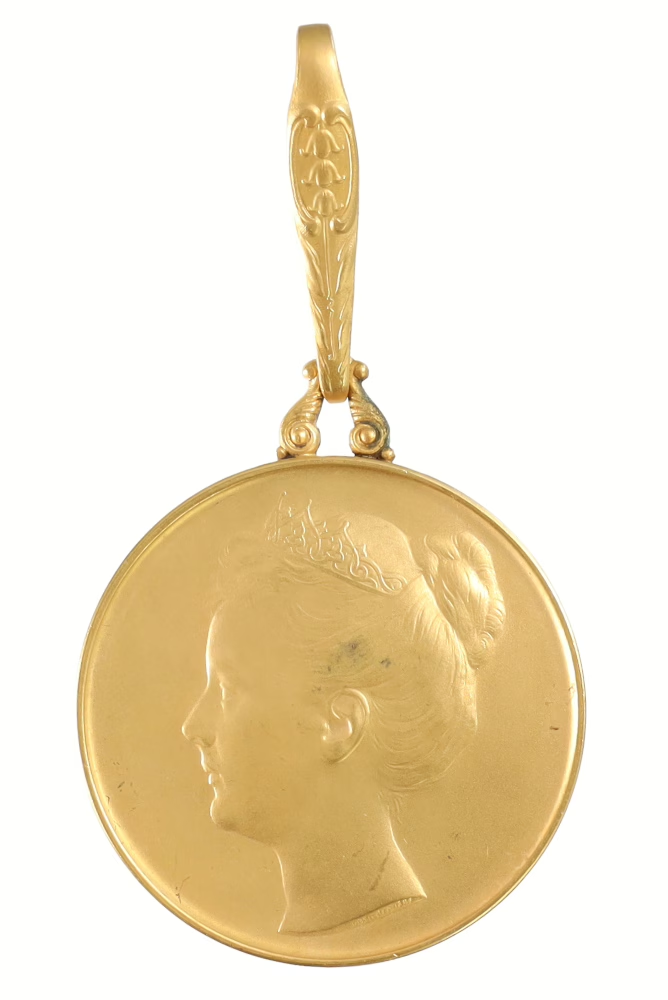
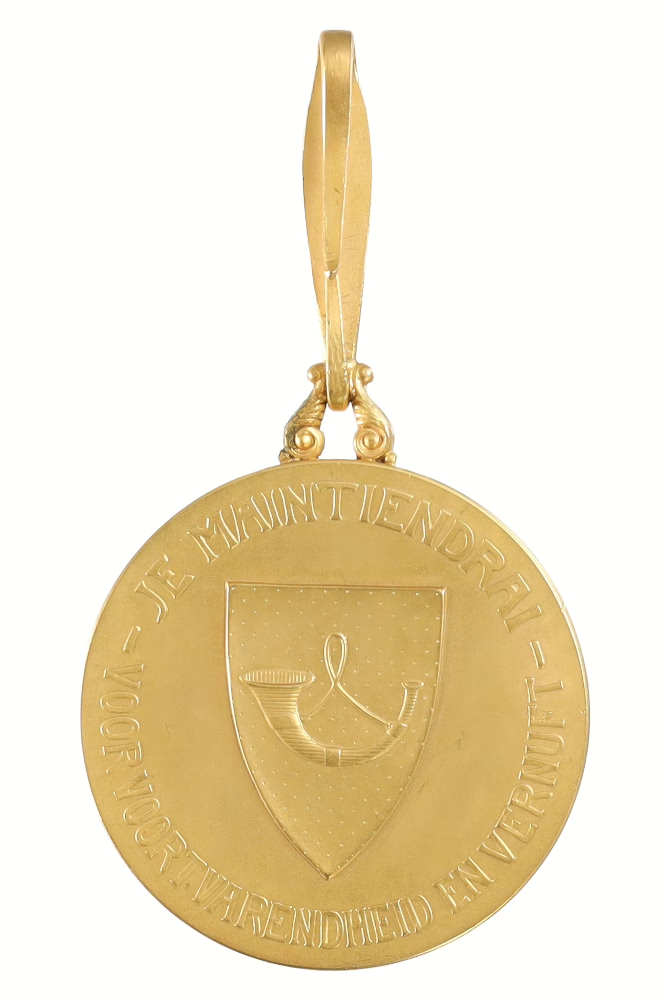
Medal of Honour for Diligence and Ingenuity
The Medal of Honour for Diligence and Ingenuity was established by Royal Decree on 14 November 1908 as a reward for individuals who have demonstrated, in the eyes of the Royal Family and society, that they particularly excel in the qualities from which the medal derives its name.
Until the reorganisation of the Order in 1969, the Medal of Honour for Arts and Sciences had three classes: gold, silver and bronze. Nowadays, the Medal of Honour for Arts and Sciences is awarded exclusively in gold.
The Medal of Honour for Enterprise and Ingenuity was struck by Koninklijke Begeer; the dies were engraved by Piet Pander. The medal is still awarded today and is listed in the order of precedence for honours laid down by the Minister of the Interior.
General
| Start date | 1908 |
|---|---|
| End date | |
| Captions | keerzijde: VOOR VOORTVARENDHEID EN VERNUFT |
| Dimensions [width] | 48 mm |
| Material | gold; silver; bronze |
| Number |
Background
| Institutional decision | Royal Decree, 14 November 1908 |
|---|---|
| Additions | Royal Decree, 20 November 1969 |
| Objective | Established as a reward for people who have demonstrated, in the eyes of the Royal Family and society, that they particularly excel in the qualities from which the medal derives its name |
| (Historical) context | |
| Producer | Koninklijke Begeer; Pier Pander |
| Bibliography | Orders and Decorations of the Netherlands, 118–119 |
| Note | Until the reorganisation of the Order in 1969, the Medal of Honour for Arts and Sciences had three classes: gold, silver and bronze. Nowadays, the Medal of Honour for Arts and Sciences is awarded exclusively in gold. |
Section
| In full | House Rules of Orange |
|---|---|
| Share | |
| Additions | none |


