


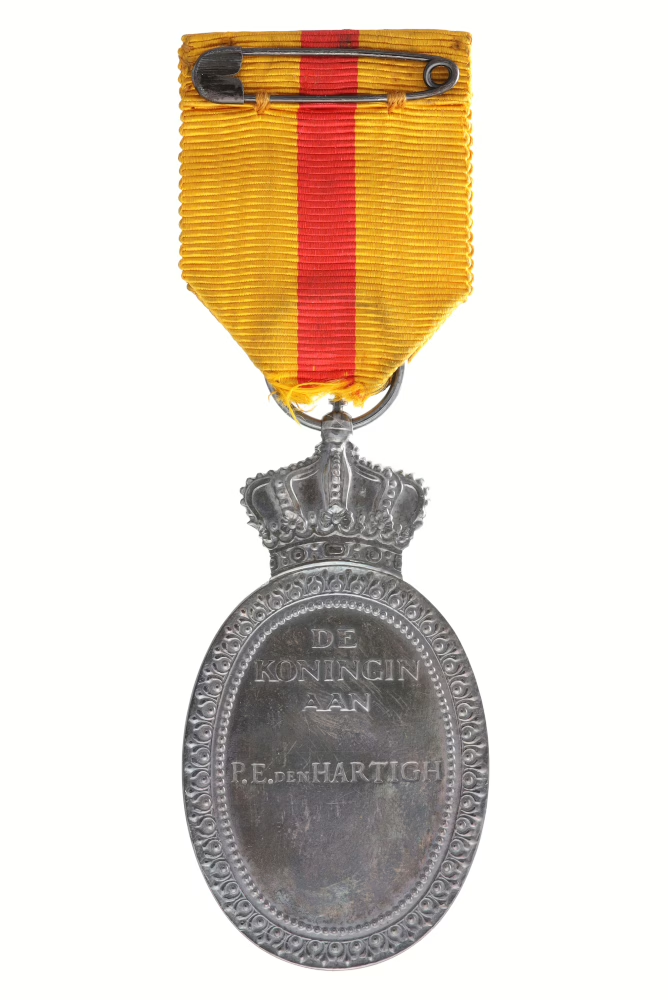
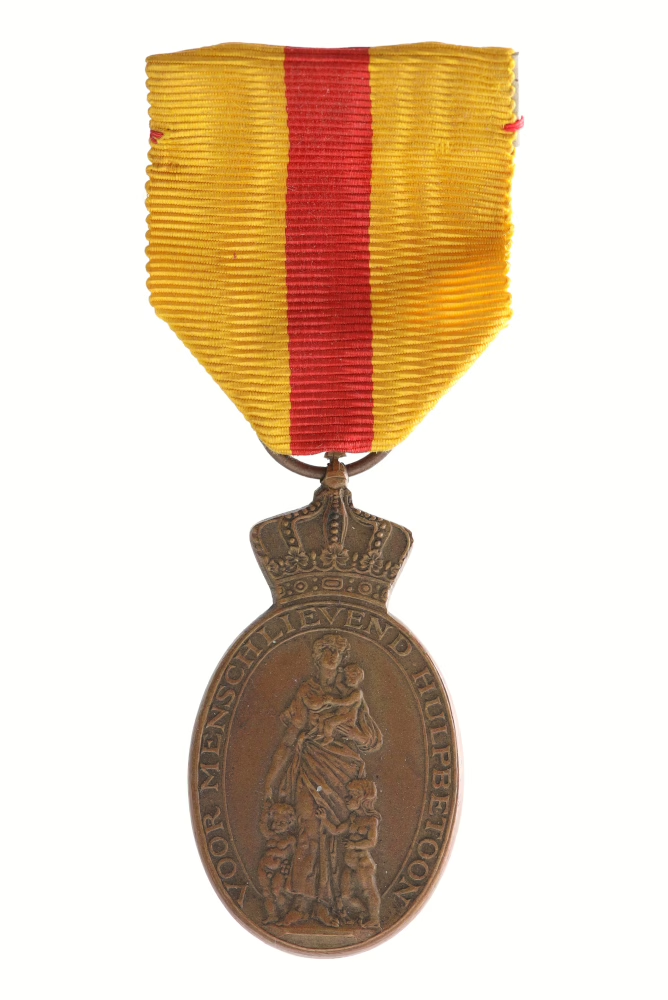
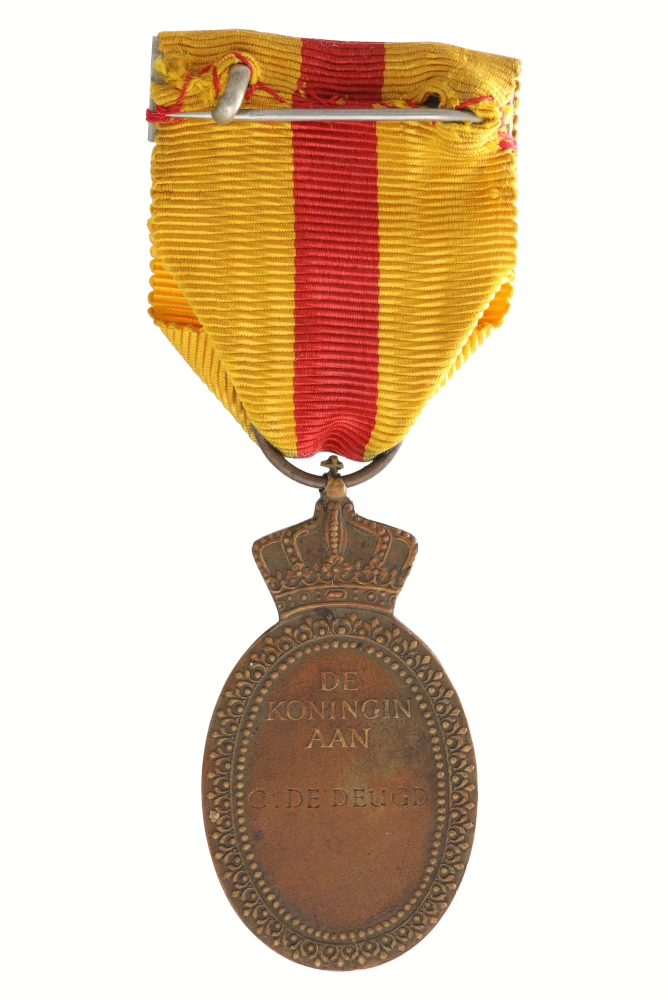


Medal of Honour for Acts of Humanitarian Aid, issued since 1912
The Medal of Honour for Acts of Humanitarian Assistance was established to recognise acts of humanitarianism characterised by courage, prudence and self-sacrifice.
The Medal of Honour for Acts of Humanitarian Aid, of the type in use since 1912, was established by Royal Decree of 11 April 1912. The medal was struck at the Royal Mint; the dies were engraved by Johannes Cornelis Wienecke. A total of 41 gold, 288 silver and 1,856 bronze medals were struck.
The Medal of Honour for Humanitarian Assistance is still awarded today and is listed in the order of precedence for honours, as laid down by the Minister of the Interior.
General
| Start date | 1912 |
|---|---|
| End date | |
| Captions | voorzijde: VOOR MENSCHLIEVEND HULPBETOON; keerzijde: DE KONING AAN |
| Dimensions [width] | 33 mm |
| Material | gold; silver; bronze |
| Number | gold: 41; silver: 288; bronze: 1,856 |
Background
| Institutional decision | Royal Decree, 11 April 1912, No. 4 |
|---|---|
| Additions | |
| Objective | Established as a reward for acts of humanity characterised by courage, prudence and self-sacrifice. |
| (Historical) context | |
| Producer | The Royal Mint; Johannes Cornelis Wienecke |
| Bibliography | Orders and Decorations of the Netherlands, 130 |
| Note | The Medal of Honour for Humanitarian Aid is awarded in three classes: gold, silver and bronze. Until 2013, the inscription on the reverse read: ‘TO THE QUEEN’. Below this, there is space to engrave the recipient’s name. For the obverse, Wienecke drew inspiration from the Charitas sculpture group on the façade of the former town hall in Bolsward. |
Section
| In full | Medal of Honour for Humanitarian Assistance |
|---|---|
| Share | |
| Additions | none |


