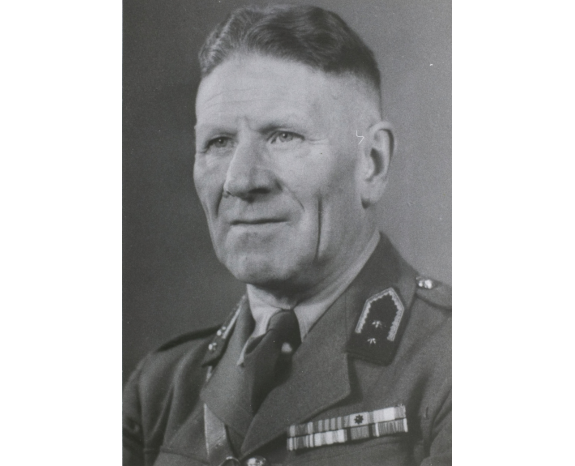
As the Second World War entered its final phase, a new disaster loomed over the Netherlands. Large parts of the country could have been flooded to slow down the Allied advance. Behind the scenes in the Netherlands, one man worked tirelessly to assess that threat: engineer and resistance fighter Jacobus Kok.
His story begins at a time when water once again played a decisive role in Dutch history.
Water as a powerful weapon
For centuries, the Netherlands has used water as a means of defence. By flooding the polders, enemies could be held at bay and strategic areas protected. From the Relief of Leiden to the struggle against foreign armies, water has regularly proved to be an ally in times of war.
During the Second World War, this centuries-old strategy took on a new significance. As the Allies approached the Netherlands, the German occupiers drew up plans to flood large parts of the western Netherlands. This threatened not only to cause military damage, but also to result in a humanitarian disaster for the population.
A secret network to counter German plans
Jacobus Kok was born in Harderwijk in 1894 and chose a career in the Engineers at a young age. His knowledge of infrastructure, hydraulic engineering and military technology made him invaluable during the war.
Within the Orde Dienst, a resistance organisation, Kok was put in charge of a specialist section that investigated German defences and flood-control plans. Together with a number of engineers, former military personnel and water management experts, he established a nationwide network. Through this network, hundreds of maps, drawings and reports were collected and sent to London.
The information gave the Allies a unique insight into bridges, locks, dykes and planned flooding. In total, around a thousand reports were shared, which made a significant contribution to the preparations for the liberation of the Netherlands.
A prestigious award for courage and insight
Kok’s exceptional contribution did not go unnoticed. In 1945, he was awarded the American Legion of Merit, a decoration for military personnel who have distinguished themselves through extraordinary merit.
A few years later, he was awarded one of the Netherlands’ highest honours for bravery: the Bronze Lion. The citation explicitly referred to his leadership role within the intelligence service, the value of his reports on the German flood plans, and his involvement in the negotiations surrounding the German surrender.
With his knowledge of water management and his work for the Resistance, Jacobus Kok helped the Allies prepare for the liberation of the Netherlands. His honours remain a tangible reminder of a man who fought with knowledge, insight and perseverance.
ROBIN BIEMANS
With thanks to Ernst Wilschut for the story.