A pile of old papers. At first glance, they look like ordinary documents from an estate. But hidden amongst the letters, forms and envelopes lies a story that may extend far beyond the Second World War. Was resistance hero Chris Navis active in a secret organisation again after the war? We cannot say for certain, but the documents that have been found raise some intriguing questions.
His story begins during the German occupation, when courage, secrecy and mutual trust were of vital importance. The experiences of those years later formed the basis for new secret networks designed to prepare the Netherlands for a possible new occupation.
A new threat following the liberation
After the Second World War, there was a fear that Europe might be occupied again, this time by the Soviet Union. The Netherlands therefore began setting up a so-called ‘Stay Behind’ network as early as 1946: a secret organisation tasked with organising the resistance, intelligence and sabotage in the event of an occupation.
This organisation was looking for people with experience in the underground resistance. It was precisely the lessons learnt from the war that highlighted how important well-prepared networks could be when a country unexpectedly came under enemy control.
From resistance fighter to possible secret collaborator
During the war, Chris Navis was one of the most prominent members of the Dutch Resistance. He worked independently to establish contacts within the Resistance, managed to avoid arrest on several occasions, and played a key role in the national Resistance movement. For his exceptional courage and dedication, he was later awarded the highest Dutch decoration for bravery.
However, documents raising questions also emerged from his estate. These include letters from someone signing as ‘Van Eyk’, instructions for a meeting involving code phrases and aliases, and a detailed questionnaire concerning resistance work, military experience and personal circumstances. There is no conclusive evidence that Navis was a member of the Dutch Stay Behind organisation, but according to the original investigator, the documents do provide an interesting working hypothesis.
A knighthood as a lasting mark of recognition
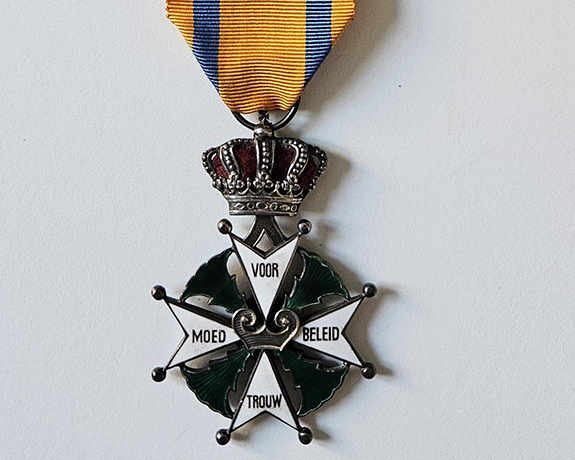
For his exceptional work in the resistance, Chris Navis was appointed Knight 4th Class of the Military Order of William, the highest Dutch honour for courage, leadership and loyalty in wartime. The citation extensively praises his dedication to building up the resistance, his dangerous missions and his exemplary conduct.
The documents from his estate may well add a new chapter to his life story. Whether they actually prove that he was active within a secret Dutch network even after the war remains an open question for the time being. It is precisely this unanswered question that makes Chris Navis’s story so remarkable.
With thanks to Erik Naberhuis, whose research and original narrative formed the basis for this Dutch KROON adaptation.
Read more
Would you like to read the full research report with the detailed supporting evidence? Then visit the Erikscollectables website and read the original article HERE.