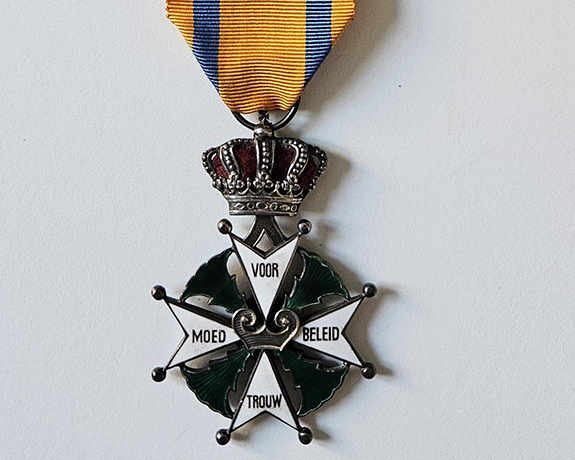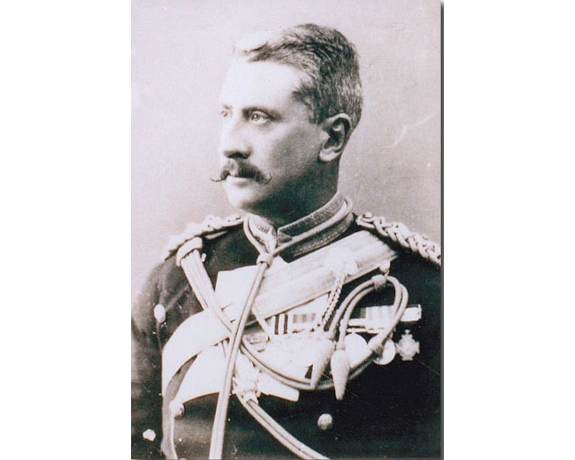

Captain Lockhart of the British Indian Army wished to join the KNIL should hostilities break out. Governor-General Van Lansberge agreed to this request. Alongside Lockhart, his compatriot Captain Palmer would also serve with the Royal Dutch East Indies Army for several months.
Observers
In the19th century, it was very common to send military observers to other countries. The Dutch East Indies and the KNIL were very popular with countries such as England, Germany, France and Japan. This was particularly true of northern Sumatra, where the Aceh War had broken out in 1873.
William Stephen Alexander Lockhart (1841–1900) and Arthur Power Palmer (1840–1904) arrived in the harbour of Kota Radja – now Banda Aceh – on 19 November 1876. Lockhart was to stay for four months, Palmer for almost a whole year. And as for hostilities … they were in the right place at the right time.
More than mere observers
At first, things were relatively quiet, but by the end of January 1877, fighting flared up in north-eastern Aceh. Lockhart and Palmer were not merely observers, but took an active part in the fighting. They were among the first to enter the fortified town of Lambadak. Lockhart was wounded in the leg near Sigli and had to return to India, but Palmer remained and took part in operations against Simpang Olim in July and against Samalangan in August and September.
Honours
A number of Dutch staff officers who had served during the same period under similar circumstances received decorations for their service. It is therefore not surprising that the commander of the Dutch East Indies Army, Karel van der Heijden, also nominated Lockhart and Palmer for the Military Order of William in January 1878. However, the authorities in Great Britain were not in favour of awarding foreign decorations for valour to British subjects. Consequently, the nomination was not pursued. What was possible, however, was the award of the Cross for Distinguished Military Service. Both British officers received this decoration.
Career
Lockhart and Palmer went on to make careers in the military. Both received high British honours and were created knights. Sir William Lockhart became ‘commander-in-chief’ of the British Indian Army in 1898. Sir Arthur Power Palmer succeeded him in 1900.
In the19th century, the exchange of observers was very common. But the line between observing and participating was a very fine one.
For a more detailed version of this story, see: R.W. Rijpkema, ‘British officers nominated for the Military Order of William’. In: Decorare 42 (December 2019), 5–7.
With thanks to Rogier Rijpkema.