


Following the performance of the opera *La Muette de Portici* at the Théâtre Royal de la Monnaie in Brussels, anti-Dutch riots broke out in August 1830. These would ultimately lead to the founding of the Kingdom of the Belgians. Fierce fighting took place, particularly around the Citadel of Antwerp.
The United Kingdom of the Netherlands
Following Napoleon’s defeat in 1815, the provinces of the former Republic and the former Austrian Netherlands together formed the United Kingdom of the Netherlands. William Frederick, the son of the stadtholder who had fled in 1795, ruled the new state as King William I. He was also Grand Duke of Luxembourg. The kingdom was intended to act as a buffer against any future French expansionist ambitions. However, the Protestant North and the Catholic, largely French-speaking South were not a good match.
The Belgian Revolution
The riots in Brussels spread to large parts of Belgium. And when William I sent troops to Brussels in September 1830, a national uprising broke out. Things then moved quickly: in early October, a Provisional Government declared independence, and by the end of that month most areas in the south were effectively under the authority of the Provisional Government. The Dutch strategy was limited to defending the fortresses of Maastricht and Luxembourg, the Citadel of Antwerp and maintaining control of the Scheldt.
The Citadel of Antwerp
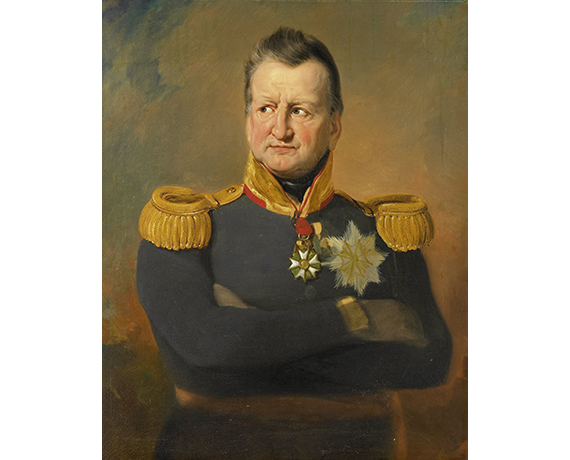
The troops defending the Citadel of Antwerp were under the command of Baron Chassé. David Hendrik Chassé was a highly experienced career officer with an exceptionally long service record. As early as 1787, he had fought alongside the patriots against the Prussians. He subsequently served under Louis Napoleon and, in 1810, entered the service of the French Emperor Napoleon Bonaparte. After returning to Dutch military service in 1814, he played an important role in the Battle of Waterloo.
Chassé defended the Antwerp Citadel tooth and nail. First against the Belgian revolutionaries. When they broke the agreed ceasefire, Chassé had the city bombarded for hours on end. And when France came to Belgium’s aid following the Ten Days’ Campaign of August 1831, Chassé defended the Citadel against the French. Eventually, after a 24-day siege, the Dutch garrison was forced to surrender. Chassé and his troops were taken prisoner.
The Committee of Recognition
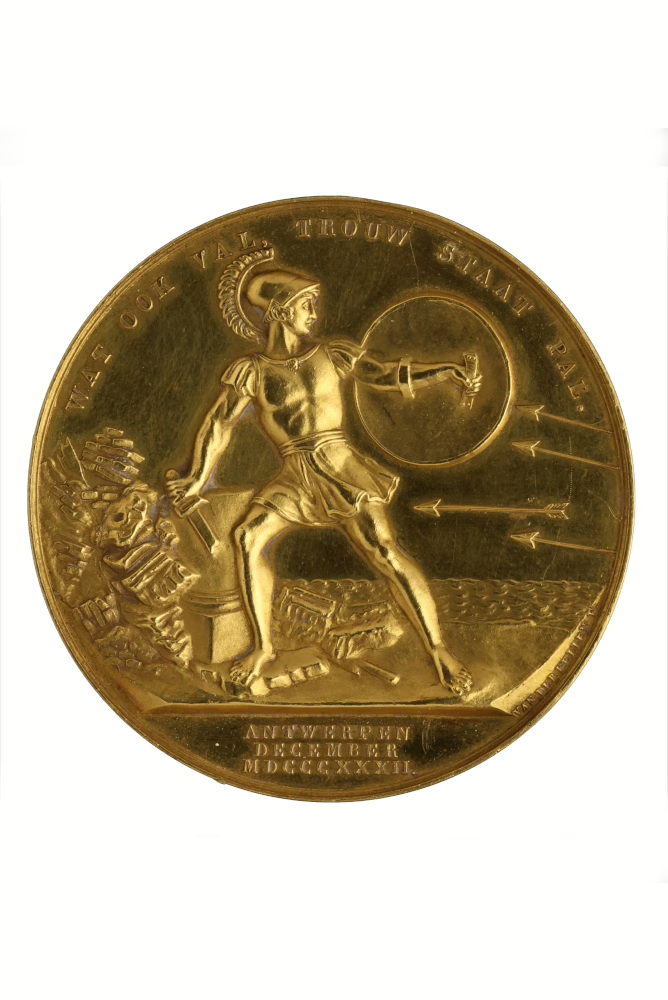
In late 1832, the Committee for the Recognition of the Soldiers at the Citadel of Antwerp was established, a private initiative to raise funds for the defenders of that fortress. In July, the committee decided to have medals struck for the veterans at the Royal Mint in Utrecht.
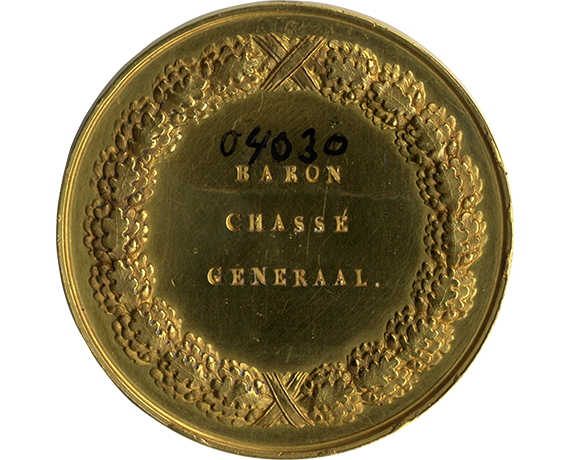
A total of 11 gold, 193 silver and 4,425 bronze medals were awarded. The silver and bronze medals were intended for officers and enlisted men. The gold medals were awarded to King William I, Princes William and Frederick, and eight members of the Citadel’s Defence Council. Baron Chassé also received a gold medal.
In the North, Chassé was honoured as a hero. But in Belgium, the general who ordered the bombing of Antwerp was regarded as a war criminal. Nowadays, David Hendrik Baron Chassé has been all but forgotten. Yet the general’s gold Citadel medal and other honours have been preserved in the collection of the Flipje and Streekmuseum Tiel.