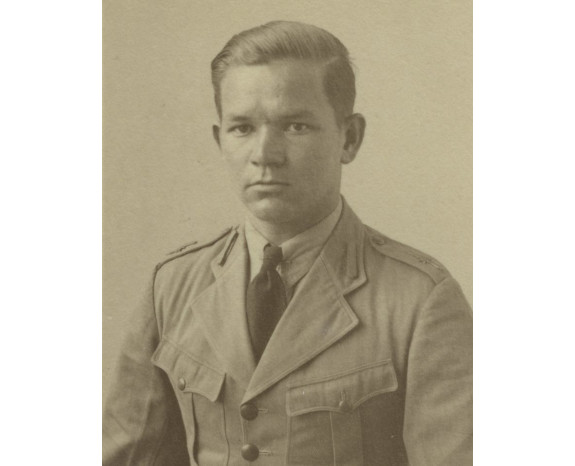
A Glenn Martin takes off on yet another dangerous wartime mission. The aircraft is outdated, but that does not keep Carel Jan Herman Samson grounded. As commander of a small formation of bombers, he carries out repeated attacks on key Japanese targets in the Dutch East Indies in February and March 1942.
His actions during those decisive weeks were the result of a military career that had begun a few years earlier.
An air force facing a tough battle
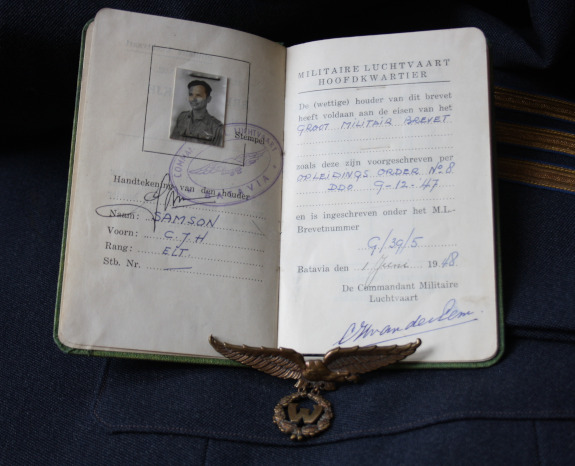
Samson was born in Surabaya in 1916 and began his compulsory military service in 1937. A year later, he voluntarily continued his training with the KNIL Military Aviation Corps. He obtained his military pilot’s licences and eventually became a pilot-observer.
When the war with Japan broke out, Samson was a patrol commander with the Second Air Group. His unit flew Glenn Martin bombers: aircraft that had once been state-of-the-art but were now seriously out of date.
Time and again, Samson charged towards the enemy
From December 1941, Samson carried out reconnaissance flights from various airfields. In February and March 1942, his mission changed. As commander of a bomber patrol, he carried out attacks on targets including Palembang, ships in the Bangka Strait and Kalidjati airfield.
The risks were high. The targets were protected by enemy fighter aircraft and heavy anti-aircraft fire. During the fighting, several aircraft from Samson’s patrol were lost. He himself continued to fly until the surrender on 8 March 1942 brought the fighting in the Dutch East Indies to a temporary end.
The Bronze Lion for Bravery over the Dutch East Indies
Following the surrender, Samson was taken prisoner of war in Japan. He was liberated on 28 August 1945 and subsequently returned to the Dutch East Indies, where he continued his military career.
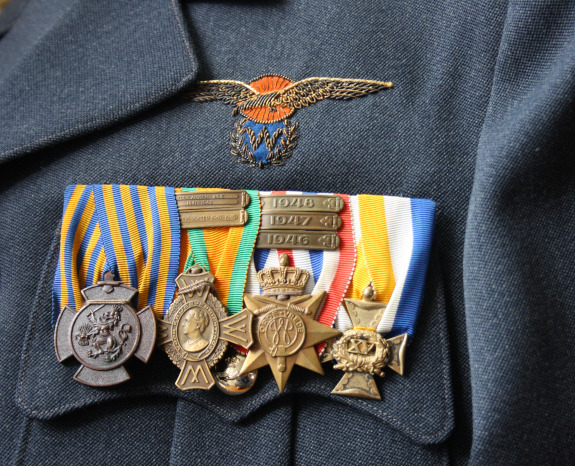
For his actions in February and March 1942, he was awarded the Bronze Lion, which was presented to him on 1 September 1948. The award recognised his exceptionally courageous and skilful conduct as a patrol commander and the many successful attacks he carried out under difficult circumstances.
After the war, Samson remained active as a pilot and instructor. He eventually rose to the rank of lieutenant-colonel. He retired in 1969 and passed away in 1993. For the full story, see the Erikcollectables website.