The Order of the Golden Lion of Nassau
As a symbol of the unity between the Ottonian and Walramian lines of the House of Nassau, William III, in his capacity as Grand Duke of Luxembourg, and Adolf, Duke of Nassau, jointly established the House Order of the Golden Lion of Nassau. This order holds a special position as it has two Grand Masters. In the Netherlands, the order is a house order, whilst in Luxembourg it currently holds the status of a state order.
General
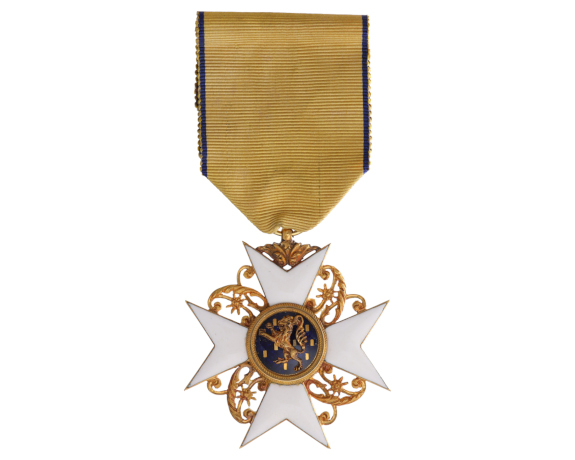
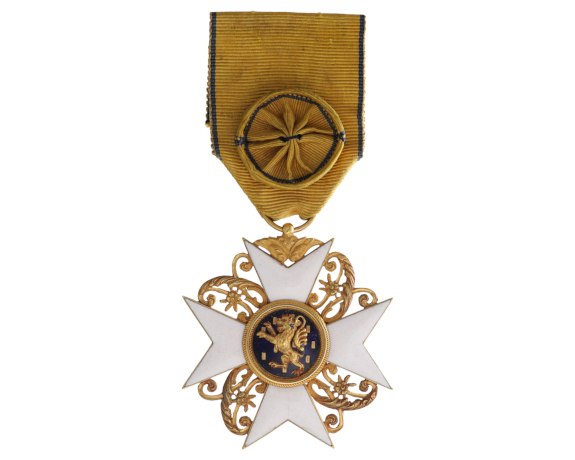
Originally, the order had only one class: that of Knight; but after the Duchy of Nassau was annexed by Prussia in 1866, William III, without Adolf’s consent, expanded the number of classes: by three in 1873 and by a further one in 1882. Following the death of King William III, Queen Wilhelmina no longer had authority over the Order of the Golden Lion of Nassau. This changed in 1905 when an agreement was concluded between Queen Wilhelmina, as head of the Ottonian branch of the House of Nassau, and Adolf of Nassau, Grand Duke of Luxembourg, as head of the Walram branch of the House of Nassau. The agreement provided for the restoration of the order as a joint order of both branches of the House of Nassau, comprising a single class: that of Knight Grand Cross. This highly exclusive order of knighthood is, in the first instance, reserved by birth for the princes, that is to say, the sons and brothers of both heads of state. The insignia associated with this honour may not be worn until the recipient has reached the age of majority. Consequently, none of the female heirs to the Dutch throne could be admitted to this order by birth. However, this does not preclude the possibility of them being appointed to this order by other means. Wilhelmina would never be accorded such an honour, but Queen Juliana and Prince Bernhard were appointed to this order during a state visit to Luxembourg in 1951.
Queen Beatrix was also never admitted to the order. On 30 April 1980, the day of their mother’s coronation as Queen of the Netherlands, the three sons of Beatrix and Claus were, as sons of the Grand Master of this Order in the Netherlands, legally conferred the rank of Knight Grand Cross in the House Order of the Golden Lion of Nassau. From the age of eighteen, they wore the insignia on their uniform or tailcoat. The King of the Netherlands and the Grand Duke of Luxembourg may both appoint individuals to the House Order of the Golden Lion of Nassau, either on a joint nomination or individually. In the Netherlands, this honour is awarded very rarely. Well-known examples include the awards presented to Dr M. van der Stoel on 31 August 1999 and to Prof. Dr P.H. Kooijmans on 28 November 2006. In 1999, Queen Beatrix and Grand Duke Jan jointly awarded the Golden Lion of Nassau to the South African President, Nelson Mandela.

Development 1858–1873
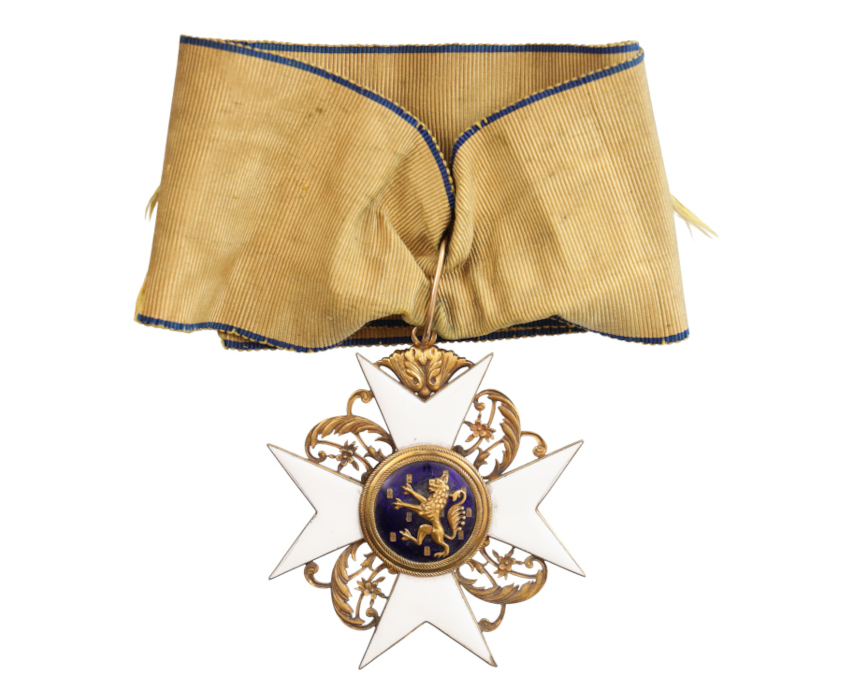
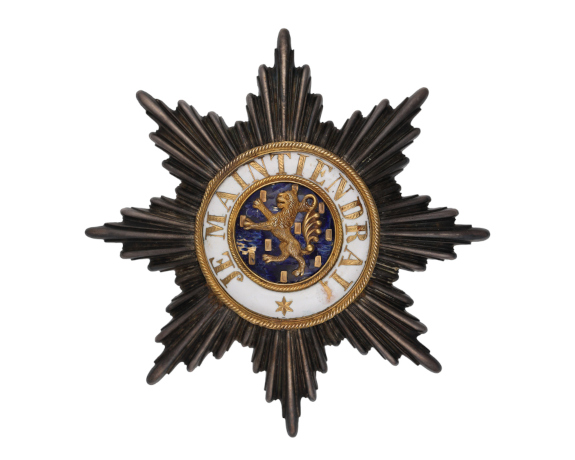
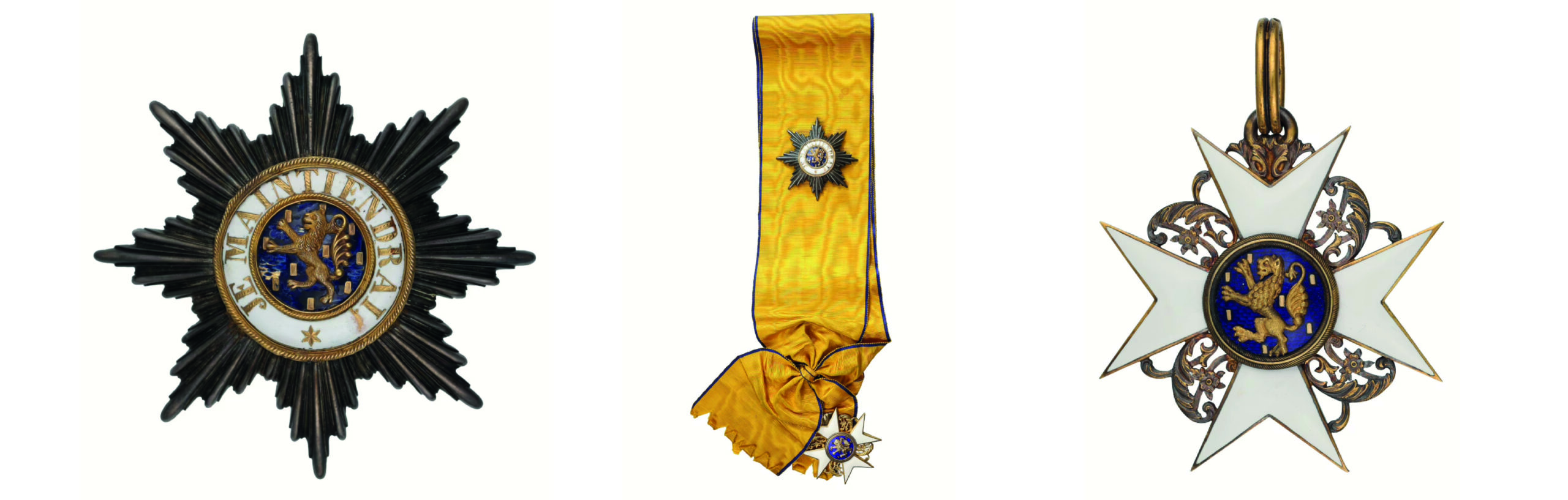
On 31 March 1858, the statutes of the Order were published and the first awards were made. The first appointments to the Order concerned the sons and brothers of the heads of the Nassau lines, as the statutes stipulate that they are knights by birth. The right to confer the Order lies with the heads of the two Nassau lines, and the Luxembourg Minister of State holds the office of Chancellor of the Order. The Order could be conferred jointly by the Nassau lines, but this usually took place on the initiative of one of them. When a decoration was conferred on one’s own initiative, the other sovereign was informed so that both remained aware of who had been appointed to the Order. In the early years, the number of appointments made by Adolf of Nassau was significantly higher than that made by William III. The difference in numbers can be explained by the fact that the King of the Netherlands had several orders of knighthood at his disposal. Knights of the Order of the Golden Lion of Nassau wear the jewel on a sash approximately 105 millimetres wide. The size of the jewel is not specified in the Order’s statutes, but the known examples are 75 millimetres wide and thus strikingly large. In addition to the sash, a knight wears a breast star. This breast star has eight rays, with the Lion of Nassau at its centre. Surrounding the lion is the inscription ‘Je Maintiendrai’.
Development 1892–present
The order now comprises the following classes:
1873 and 1882
1890
1905
Sources
Development 1873–1882
The order now comprises the following classes: