

Several dead bodies still lay burnt alive on the deck. Elsewhere, bodies covered in blood and with mutilated limbs had been flung against the gunwales. There was a constant groaning and wailing below deck from the seriously wounded who could not be helped immediately. This harrowing description was given by Carel Hendrik Ver Huell of the scene on board the ship Argo immediately after the Battle of Dogger Bank.
The naval battle
On the morning of Sunday 5 August 1781, an English and a Dutch fleet clashed at Dogger Bank, a shoal in the North Sea to the north-west of the Netherlands. Throughout the morning, seven British and seven Dutch ships of the line engaged each other. On the Dutch side, there were 123 killed and around 400 wounded, a large number of whom died in the days following the battle. On the British side, there were 108 killed and 339 wounded.
The problem faced by Stadtholder William V
As Admiral-General, Stadtholder William V was the highest-ranking officer in charge of the Republic’s fleet. However, the fleet’s performance had not been particularly impressive up until that day in August. Almost without a fight, the English had captured hundreds of Dutch merchant ships and occupied several colonies belonging to the VOC and the WIC. And on top of that, William V had an English mother …
Rewards for the heroes of Doggersbank
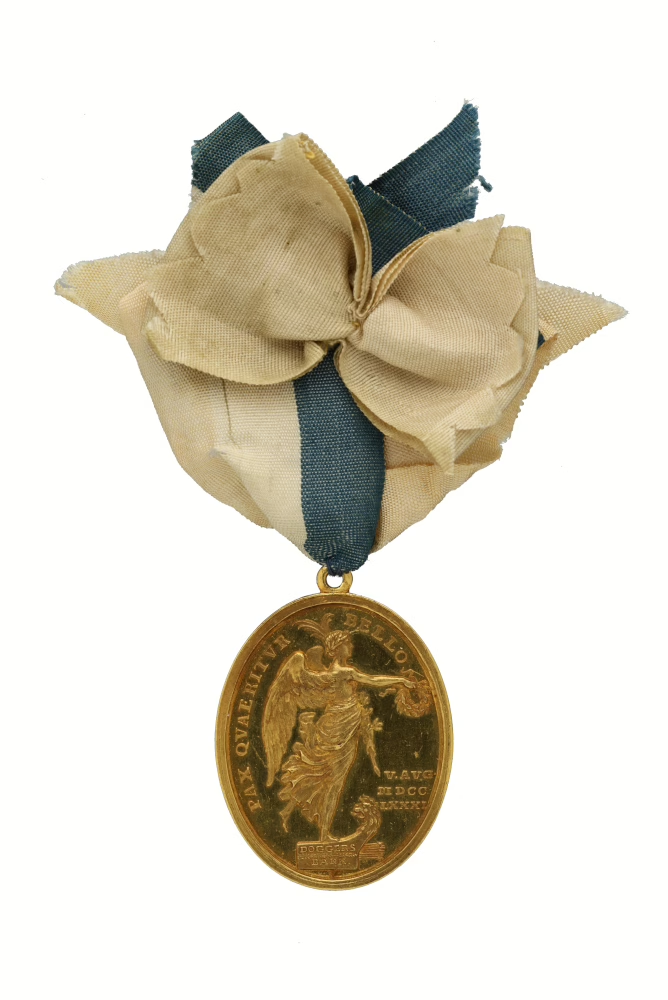
The fleet’s resolute action at Dogger Bank presented opportunities. William V showered the ‘heroes of Dogger Bank’ with medals, promotions and other honours. And all the crew members of the fleet received two months’ extra pay.
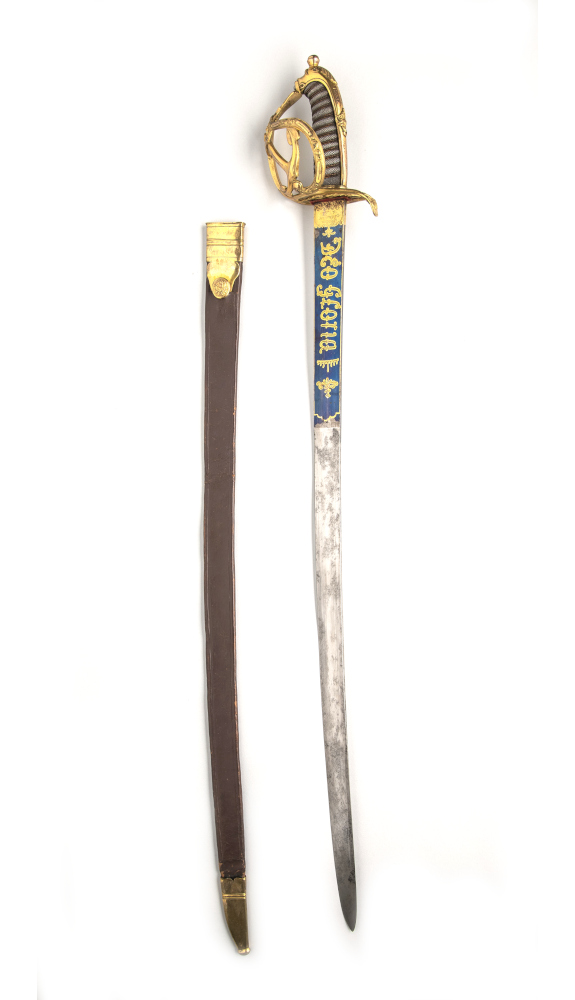
The fleet’s senior officers were also presented with a ceremonial sabre bearing the inscription ‘BATTLE OF DOGGERSBANK, 5 AUGUST 1781’. In total, the Hague-based cutler Abraham Scheurleer supplied 18 sabres at 31 guilders and 10 stuivers each.
Short duration
But William V’s plan was short-lived. Less than two months later, the anonymous pamphlet *To the People of the Netherlands* appeared in every town of the Republic, calling for the overthrow of the stadtholder’s dictatorial rule. And to make matters worse, shortly before that, the ship the Prins Willem had, for no apparent reason, run aground on a sandbank off the coast of Texel and sunk. For the stadtholder’s opponents, that event symbolised the decline of the Republic under Stadtholder William V.
The sabres presented by Stadtholder William V to the heroes of Doggersbank in 1781 are regarded as some of the finest honours bestowed by the Republic of the United Netherlands.
With thanks to Tim Streefkerk, curator of the Amsterdam Maritime Museum. An article by him on the Dogger Bank sabre appears in the Yearbook of the Oranje-Nassau Society.